Gold Header Ad
reserve your ad hereCoco coir has become an increasingly popular growing medium among gardeners looking for an alternative to traditional soil. Made from the fibrous husk of coconuts, coco coir offers a strong balance of water retention, drainage, and root-zone aeration.
You can use it on its own, blend it with other growing media, or incorporate it into automated irrigation systems. Whether you are growing a few plants at home or managing a larger garden, coco coir provides a versatile and practical growing environment.
In this article, I will explain everything you need to know about coco coir, including where it comes from, how it differs from soil and other substrates, and why you should consider growing your next crop using coco coir!
Why You Should Consider Coco Coir
Coco coir begins life as the fibrous material found around the coconut shell. It is a natural by-product of the coconut industry and is processed before being sold as a horticultural growing medium. After processing, the material is cleaned, graded and, depending on the intended use, washed and buffered to make it suitable for growing plants.
Coco coir is commonly available in loose-filled bags or compressed formats such as bricks, blocks and slabs. Compressed products expand considerably when hydrated, making them convenient to transport and store.
One of the biggest differences between soil and coco coir is how they supply nutrients to plants. Healthy soil contains organic matter, minerals and microorganisms that contribute to nutrient availability. Depending on the soil type and growing system, plants may be able to get some of their nutritional needs directly from the growing medium.
By comparison, coco coir is generally considered a low-nutrient or inert substrate. This gives growers much greater control over what nutrients the plant receives, since nutrition is primarily delivered through the irrigation solution.
This makes coco particularly attractive to gardeners who want greater control over feeding and irrigation. It also suits techniques that sit somewhere between traditional container gardening and hydroponic cultivation.
5 Benefits of Growing in Coco Coir
There are several reasons coco coir has become such a popular growing medium. Not only does it make overwatering difficult, it produces big yields and is applicable to hydro systems. Below highlights the benefits of using coco coir as a growing medium.
#1 – Excellent Water Retention
Coco coir can hold a significant amount of water while retaining its loose, fibrous structure. This combination of moisture retention and air-filled spaces is one of the major advantages of coco. Rather than behaving like a dense, easily compacted medium, quality coco can remain relatively light and porous throughout the growing cycle.
#2 – Encourages Vigorous Root Growth
The combination of moisture, drainage and oxygen availability can create excellent conditions for root development. A healthy, well-developed root system provides the foundation for strong plant growth, particularly when water and nutrients are consistently available.
#3 – Fast and Efficient Nutrient Delivery
Because coco coir contains relatively little nutrition of its own, growers can control the nutrients supplied to plants through their irrigation water. This allows gardeners to adjust feeding according to the plant’s stage of growth and specific requirements. For growers who enjoy monitoring and fine-tuning their plants, this level of control can be a major advantage.
#4 – Suitable for Automated Irrigation
Coco coir works particularly well with drip irrigation systems. Instead of relying entirely on hand watering, growers can deliver measured quantities of nutrient solution directly to individual plants at regular intervals. This can improve consistency and reduce the amount of time required to maintain larger growing areas.
#5 – Excellent Root-Zone Aeration
Coco coir has a naturally fibrous structure that creates plenty of air spaces around the roots. Good aeration is important because plant roots require oxygen as well as water and nutrients. When the structure of the growing medium remains open and well aerated, roots can explore the substrate efficiently while still having access to moisture.
So What pH Should You Use With Coco Coir?
Coco coir is commonly managed at a slightly acidic pH. For many plants, growers generally target a nutrient solution in the region of pH 5.5–6.5, although the ideal range can vary depending on the crop and overall growing system.
A reliable digital pH meter can make monitoring much easier. If necessary, the nutrient solution can be adjusted before it is applied to the plants. It is worth remembering that pH is only one part of successful coco cultivation. Nutrient strength, irrigation frequency, drainage and the quality of the coco itself also play important roles.
One of the useful characteristics of coco coir is its ability to retain moisture while maintaining good air porosity. There is no single watering schedule that works for every plant or growing environment. Factors such as plant size, temperature, humidity, container size, lighting and the structure of the coco all influence how frequently irrigation is required.
The Different Methods for Watering Coco Coir
Hand watering is a straightforward option for smaller gardens. The aim is to provide enough water to thoroughly moisten the growing medium without leaving it excessively saturated for prolonged periods. Hand watering autoflowers or photoperiods in coco coir, is very different to soil, as you do not need to worry as much about overwatering your plants.
Allowing the substrate to reach an appropriate moisture level before watering again helps maintain a healthy balance between water and oxygen around the roots. For a small number of plants, hand watering is simple and inexpensive and ideal for first time growers.
Drip irrigation becomes particularly useful as the size of the growing area increases. Individual drippers can deliver a consistent volume of nutrient solution directly to each plant, reducing manual labour and making irrigation more predictable.
Automated systems can also be programmed to provide multiple smaller irrigation events when appropriate, which can be particularly useful in coco because the medium can be managed with frequent, controlled watering.
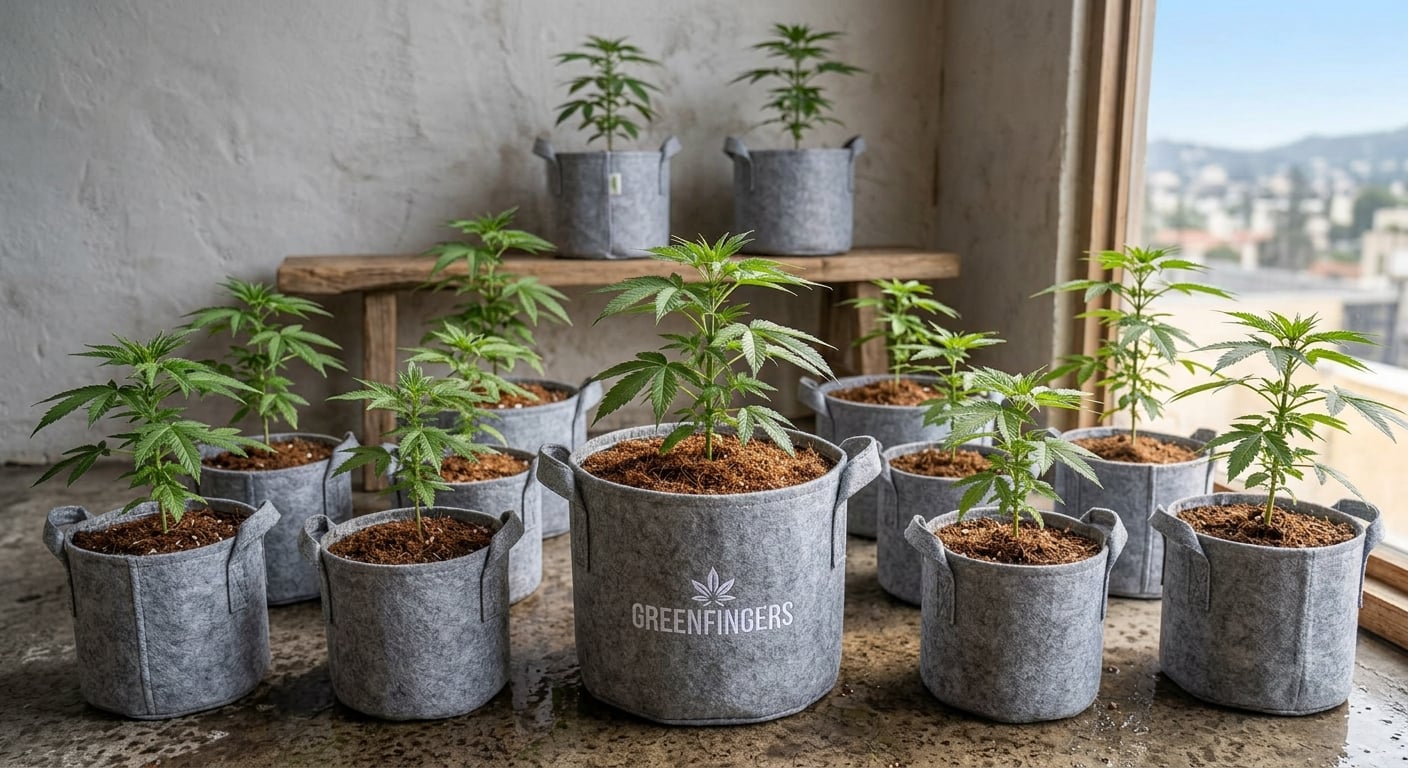
Feature photo: This grower uses felt pots and coco coir to promote rapid root growth.