Gold Header Ad
reserve your ad hereCannabis nutrient lockout can happen for several reasons and may harm plant health, growth, and overall development. It can happen at almost any stage of the plant’s life cycle, from seedlings through to flowering. In this article, I will explain how nutrient lockout occurs and how to identify the warning signs can help growers respond before the problem becomes more serious.
How to Check Your pH Levels
Regular pH testing can help maintain a suitable environment for nutrient uptake. Rather than checking only when problems appear, make testing part of your normal growing routine.
- Check your water: Test the source water before adding nutrients so you know its starting pH.
- Check your nutrient solution: After mixing nutrients, measure the solution and make any necessary adjustments according to the requirements of your growing system.
- Check the growing medium: Monitoring the root-zone environment can help identify changes that may affect nutrient availability.
Checking Runoff
Runoff can provide additional information about what is happening within the growing medium. By testing runoff, growers can compare it with the starting solution and identify significant changes in pH or nutrient concentration.
- Collect a representative sample of runoff after watering.
- Compare runoff measurements with the original nutrient solution.
- Significant changes may indicate that the root-zone conditions need further investigation.
For general guidance, soil systems are commonly maintained around pH 6.0–7.0, while hydroponic systems are generally maintained around pH 5.5–6.5. Always follow the recommendations specific to your growing medium and nutrient products.
What Causes Cannabis Nutrient Lockout?
Cannabis plants require a combination of primary nutrients, secondary nutrients, and trace elements throughout their life cycle. However, simply having nutrients present in the growing medium does not guarantee that the plant can absorb them.
The availability of these nutrients is strongly influenced by the pH of the water, nutrient solution, and growing medium. There are several reasons why cannabis plants may experience nutrient lockout. Identifying the underlying cause is important because simply adding more nutrients can make the problem worse.
- Excessive nutrients or salts can interfere with normal root uptake.
- Incorrect pH can make certain nutrients unavailable to the plant.
- Overfeeding can create an imbalance that negatively affects the root environment.
Commercially Available Hot Soils
“Hot soil” refers to a growing medium containing a high concentration of nutrients. While nutrient-rich soil can support established plants, excessive nutrient levels may be too strong for seedlings and young plants. The growing medium’s natural pH can also influence nutrient availability.
- Highly fertilized soil can overwhelm young or sensitive plants.
- May cause symptoms that resemble nutrient deficiencies.
- Check the nutrient content and pH characteristics of a growing medium before buying
Nutrient Imbalance
Excessive nutrient salts can build up in the growing medium and interfere with the plant’s ability to absorb nutrients correctly. This can occur when plants are consistently overfed or when the growing medium does not adequately drain.
- Excess salts can create an unsuitable root-zone environment.
- Overfeeding can contribute to nutrient antagonism and reduced nutrient uptake.
- Following the nutrient manufacturer’s recommended feeding schedule can help reduce the risk of overfertilization.
Incorrect pH Levels
pH plays an important role in determining which nutrients are available to cannabis plants. Different growing systems have different target ranges, so growers should follow the requirements of their particular medium and nutrient program.
- Soil-based growing generally operates within a more acidic-to-neutral pH range.
- Hydroponic systems typically require a lower pH range than soil.
Equipment for Preventing Nutrient Lockout
Having the right equipment makes it much easier to monitor the growing environment. Regular measurements during a cannabis nutrient feeding schedule can help you identify changes in pH and nutrient concentration before they become significant problems. Additional equipment, such as soil pH meters and testing strips, can also be useful depending on your growing system.

- Digital pH meter: Useful for checking the pH of water and nutrient solutions.
- EC meter: Helps monitor the concentration of dissolved salts in a nutrient solution.
- pH adjustment products: pH-up and pH-down products can be used to make controlled adjustments when necessary.
Signs of Cannabis Nutrient Lockout
Nutrient lockout can sometimes be difficult to identify because its symptoms may resemble other plant problems. Look for multiple symptoms occurring together rather than relying on a single visual sign.
- Stunted growth: Plants may grow more slowly or stop developing normally.
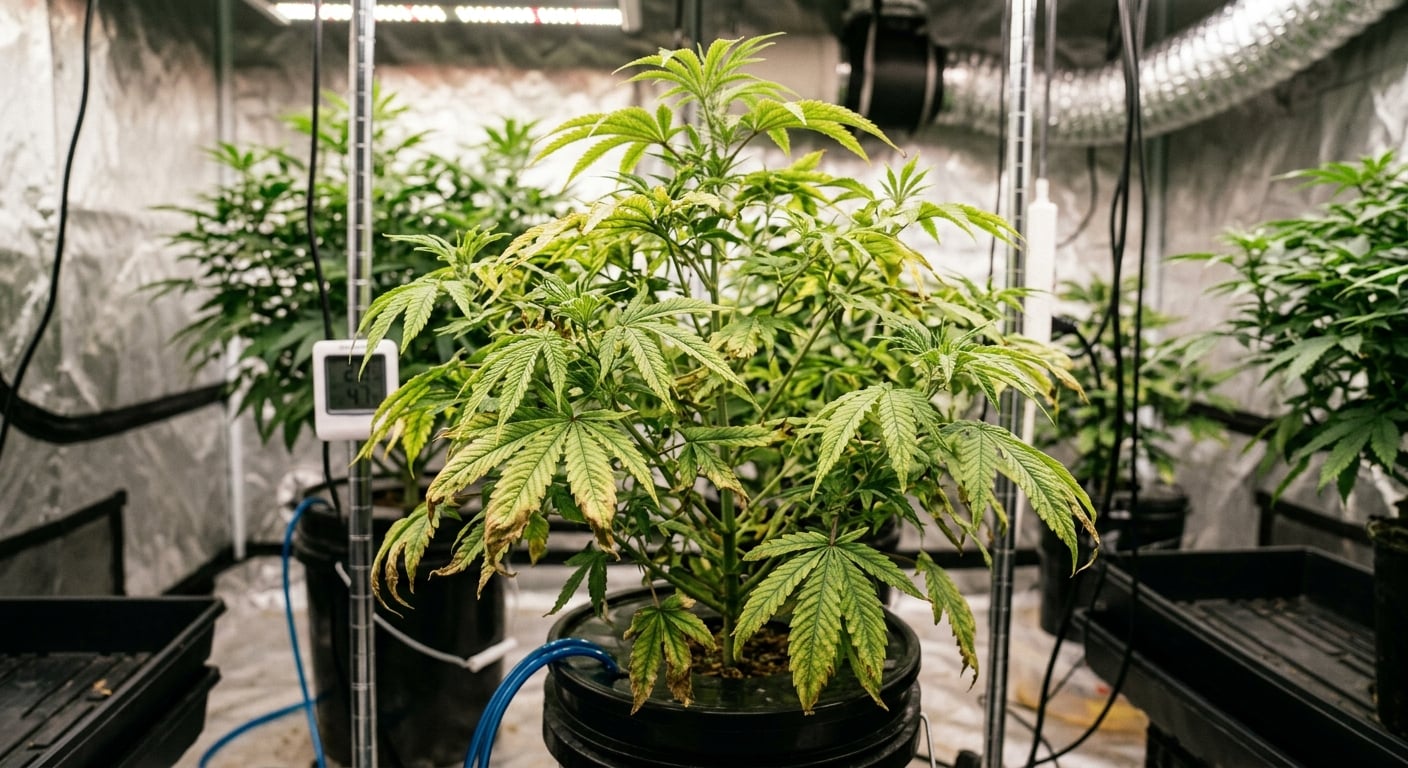
- Discolored leaves: Leaves can develop yellowing, browning, or other abnormal color changes.
- Wilting or curling leaves: Plants may lose vigor, while leaf edges can curl or change shape.
Other potential symptoms include leaf-tip burn, brittle foliage, and generally weak plant structure. Because these symptoms can also have other causes, checking pH, nutrient concentration, watering practices, and environmental conditions is important before assuming nutrient lockout is responsible.
How to Fix Nutrient Lockout
The appropriate response depends on what caused the problem in the first place. Avoid automatically adding more nutrients, as this can increase the concentration of salts and make the situation worse.
- Correct the pH: If testing shows that the root-zone pH is outside the appropriate range, address the underlying pH problem.
- Reduce nutrient concentration: If overfeeding is suspected, stop increasing nutrient levels and reassess the feeding program.
- Consider the growing medium: Severely over-fertilized or unsuitable media may require replacement, depending on the plant’s condition and growing system.
Flushing may sometimes be appropriate for certain growing systems when excessive soluble salts have accumulated, but it should be done carefully and according to the requirements of the medium and nutrient program.
Nutrient Lockout Recovery Time
Recovery time varies considerably depending on the severity of the problem, the plant’s age, the cause of the lockout, and how quickly the underlying issue is corrected. Instead of relying on a fixed recovery period, monitor new growth and the condition of the plant after correcting the underlying problem.
- Mild problems may begin improving once the root-zone conditions are corrected.
- More severe cases can take several days or longer to show obvious new growth.
- Existing damaged leaves may not return to their original appearance even after the plant has recovered.