Gold Header Ad
reserve your ad hereCannabis can be propagated through seeds or through vegetative methods such as cloning. A clone is a genetically identical plant produced from a parent plant rather than from a seed. For legal cannabis growers, licensed producers, and researchers, cloning can provide several advantages, particularly when consistency and preservation of desirable plant characteristics are important. In this article, I breakdown all of the benefits and advantages of using cannabis clones over cannabis seeds.
Consistent Genetics from Plant to Plant
One of the main reasons growers choose clones is genetic consistency. Plants grown from seeds can naturally differ from one another because of genetic variation. Even seeds from the same cross may produce plants with different characteristics.
Clones originate from the same parent plant, so they generally retain the parent’s genetic characteristics. This can make a population of plants more uniform than a population grown from genetically varied seeds. This consistency can be particularly valuable for licensed producers seeking predictable results.
- More consistent genetic characteristics
- Greater uniformity between plants
- Easier comparison of plants within a production or research environment
- Reduced uncertainty about inherited traits
Preserving Desirable Plant Characteristics
Sometimes a particular cannabis plant stands out because of characteristics that are considered desirable. These might include its aroma, cannabinoid profile, structure, growth characteristics, or other horticultural traits.
Growing another plant from seed does not necessarily reproduce those exact characteristics. A clone, however, preserves the genetic identity of the selected parent. Germinating cannabis seeds and taking 6-8 weeks before you can take viable clones may not be practical.
This makes cloning useful for genetic preservation. Once a producer or researcher identifies a particularly valuable plant, cloning provides a way to maintain that genetic line rather than relying entirely on seed propagation.
Greater Predictability
Starting with known genetics can make future plant populations more predictable. Feminised or regular cannabis seed-grown plants may show considerable differences in appearance and development, whereas genetically identical clones are expected to share many characteristics.
This can be very useful when planning a legal cultivation, breeding project or research program, and save time growing from seed and pheno hunting. Although environmental conditions still influence how plants develop, reducing genetic variation can make outcomes easier to anticipate.
- Planning production cycles
- Maintaining consistent plant characteristics
- Comparing results across growing environments
- Developing standardized production systems
- Maintaining established genetic lines
More Uniform Plant Populations
Uniformity is another significant benefit of cloning. When plants have the same genetics, differences caused by genetic variation are reduced.
For commercial operations, cloning cannabis plants can simplify planning and management. Researchers can also benefit because genetically similar plants make it easier to investigate the effects of environmental variables.
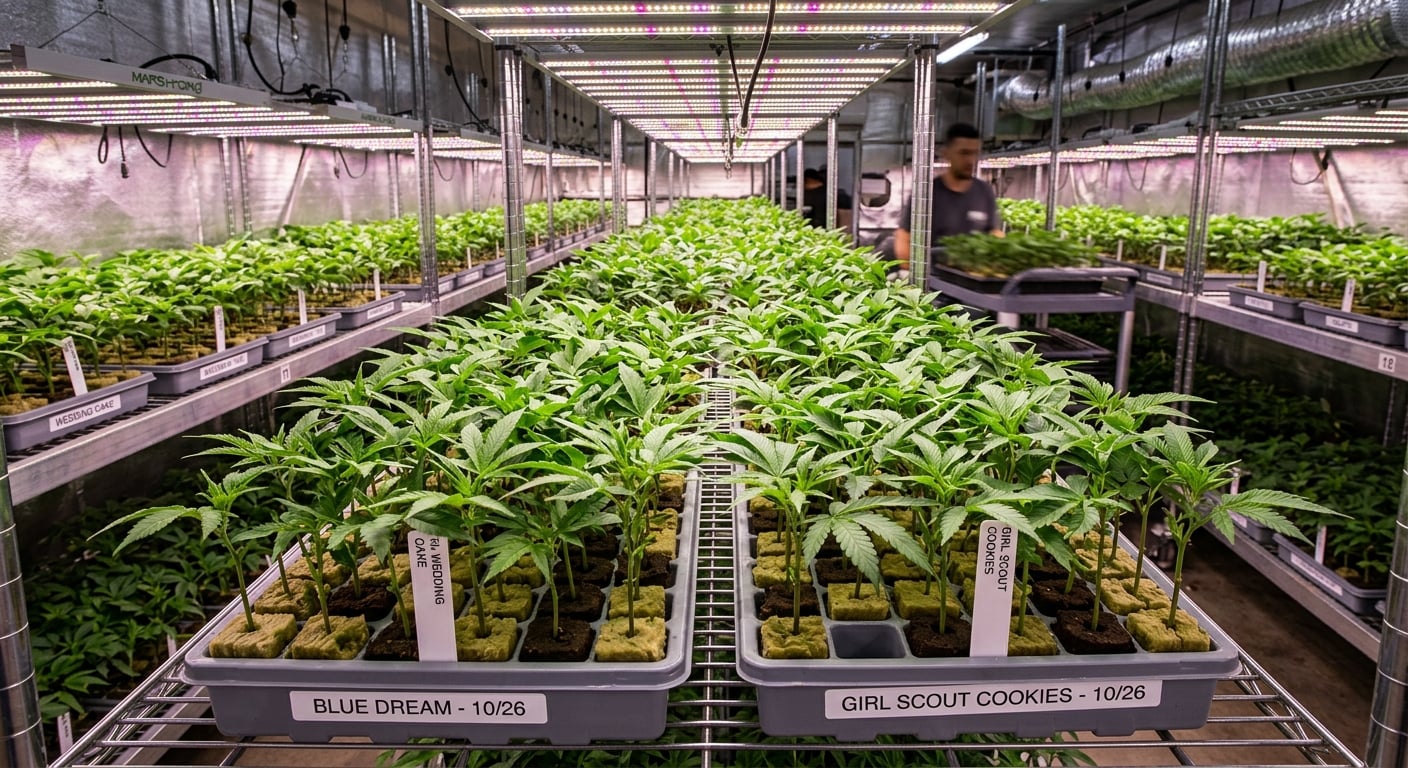
This doesn’t mean every clone will perform identically. Environmental conditions, plant health, and other factors can still produce differences. However, you will have much more control when working with Sea of Green set ups and large scale operations.
- Similar general plant characteristics
- More consistent development patterns
- Easier monitoring and record keeping
- Greater consistency when conducting controlled research
Useful for Maintaining Established Genetics
Cannabis genetics can represent significant value to breeders, researchers, and licensed producers. When a particular genetic line has desirable characteristics, maintaining that line can become an important objective.
Cloning allows a selected parent to serve as the source of genetically identical plants, helping maintain continuity over time. This can be especially useful for organizations that maintain collections of established genetic lines and want to ensure that particular characteristics remain available for future work.
Potential Time Advantages
Clones begin as vegetative plant material rather than starting from a seed. Consequently, they can bypass the initial seed-germination stage associated with seed propagation. For licensed commercial operations, this can potentially support more efficient production planning and continuity. The actual time savings depend on the propagation system, genetics, and operating conditions.
- Avoiding the variability associated with seed germination
- Starting with established genetic material
- Supporting planned production schedules
- Helping maintain continuity between production cycles
Benefits for Research and Development
Clones can be particularly useful in scientific and horticultural research. Researchers may want genetically similar plants so that they can investigate how different environmental conditions affect plant development.
For example, researchers studying cannabis may compare genetically similar plants under different controlled conditions. Reducing genetic differences can help researchers distinguish between effects caused by genetics and effects caused by the environment.
- Plant development
- Environmental responses
- Genetic preservation
- Horticultural characteristics
- Cannabinoid and terpene research
Easier Identification of a Known Genetic Line
When a plant comes from a documented parent, growers have more information about its genetic background than they might have with an unidentified seed. This can make record keeping and genetic management easier. Licensed operations may maintain information about individual genetic lines, including their origins and characteristics.
- Genetic identification
- Maintaining consistent plant lines
- Tracking parent plants
- Research documentation
- Quality-control programs
Important Considerations
Despite their advantages, clones aren’t automatically better than seeds in every situation. One potential disadvantage of relying heavily on clones is reduced genetic diversity.
Because clones are genetically similar, they may also share vulnerabilities. If the parent line has a particular susceptibility to disease, pests, or environmental stress, genetically identical plants may share that susceptibility. The health and quality of the source plant are therefore extremely important.
- Maintaining healthy parent material
- Preventing the spread of plant diseases
- Keeping accurate genetic records
- Managing genetic diversity where appropriate
- Complying with local cannabis regulations
.Clones may be preferable when the priority is:
- Genetic consistency
- Preservation of a known plant
- Uniformity
- Predictability
- Maintaining established genetic lines
Seeds may be preferable when the priority is:
- Genetic diversity
- Breeding and selection
- Exploring new genetic combinations
- Establishing new populations
My Final Thoughts
Clones can make life much easier as a grower and especially if you are planning ahead, and need reliable, consistent and uniform genetics. Of course, all clones originate from seed and several months of work to establish the phenotype is worthy and to keep a mother plant.
There can be downsides to using clones such as welcoming spider mites or a virus into your grow space. Always make sure the clones are from a reliable source that guarantees contaminant free stock!
Gold Scrolling Footer Ad
reserve your ad here