Gold Header Ad
reserve your ad hereGold Header Ad
reserve your ad hereRegenerative Farming: Why the next great cannabis revolution will be written in soil biology, foliar intelligence, and breeding for the environment. By: Priscilla Agoncillo
There are a lot of people in cannabis talking about the future of the plant who have never really knelt down long enough to understand what is happening beneath it.
They will talk to you about percentages. They will talk to you about market trends, margins, branding, consumer data, shelf velocity, hype, heat, and numbers big enough to make a panel audience nod along. They will talk about THC as though it were a religion, a receipt, and a personality trait all at once. They will tell you what sells. They will tell you what tests. They will tell you what the market wants, as if the market were some divine intelligence instead of a clumsy, overfed algorithm built on weak assumptions and weak palates. What they are less likely to talk about—because it is slower, dirtier, more technical, less sexy in a boardroom, and impossible to fake forever—is biology. Soil biology. Plant immunity. Microbial relationships. Environmental adaptation. Phenotypic selection. Root exudates. Phyllosphere dynamics. Functional cover crop. Predator-prey balance. The difference between a plant that survives because it is being dragged across the finish line and a plant that thrives because it belongs where it is growing.
That is where the future is.
And if the cannabis industry has any ambition to become something more than a frantic retail circus built around inflated numbers and disposable genetics, it is going to have to get honest, brutally honest, about two things. First, regenerative cannabis farming is not a lifestyle accessory. It is not a soft-focus branding decision. It is a highly technical biological system. And second, regenerative cannabis at scale is impossible without breeding for the environment. Not difficult. Not ideal. Impossible.
That is the thesis. Everything else is decoration.
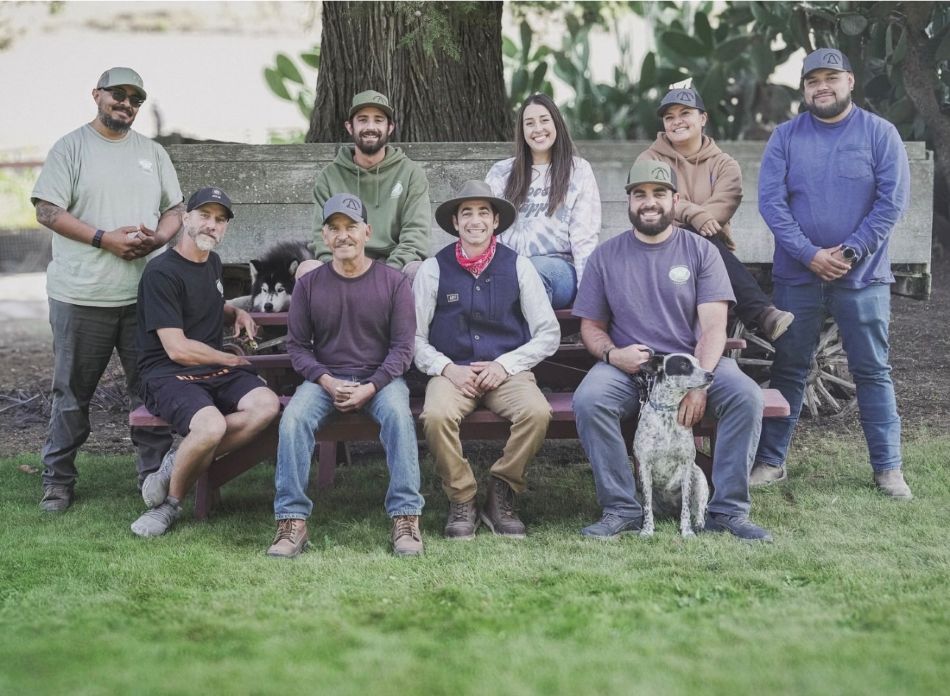
There is a case study for this now, written not in theory but in acreage, observation, and practice. Jim Sadegi, also known as Jimmy “The Chef—is one of the clearest living examples of what happens when someone with an obsessive reverence for ingredients, a deep understanding of environmental nuance, and decades of breeding experience applies that worldview to cannabis. He is currently the Chief Cultivation Officer and his work along with the amazing team at Los Alamos Gardens in California offers a powerful proving ground for a much bigger argument. The farm itself matters, yes. The scale matters. The systems matter. But what matters most is what it reveals: that cannabis can be cultivated regeneratively at serious commercial scale, and that the only way to do it well—really well, without greenwashing, without compromised quality, without turning the whole thing into a marketing costume—is to merge regenerative farming with rigorous environmental breeding and phenotype selection.
Jim is an unusually precise messenger for this idea because he did not arrive at cultivation through trend or opportunism. Instead, he came through kitchens. Real ones. Before his current role, before becoming an award-winning cannabis breeder, before he was helping define large-scale regenerative cannabis systems, he earned a dual degree in International Business and Marketing from Kelley School of Business Indiana University and then trained at Johnson & Wales to achieve a Culinary degree. From there he went into Europe and cooked in the sort of high-level culinary environments where genius and abuse often share a prep table. The molecular gastronomy world he entered was not simply about flash or foam or culinary theatrics for rich people with expensive taste and short attention spans. At its best, it was a philosophy of transformation. It asked what an ingredient is, what it can become, what pressure reveals, what heat alters, what time dignifies, and what precision can unlock. It was chemistry in service of awe, but it was still utterly dependent on the quality of the raw material. No amount of wizardry can resurrect a dead ingredient. You can spherify, smoke, aerate, dehydrate, gel, distill, and architect until your wrists have carpal tunnel, but if the ingredient itself is hollow, you are not making art. You are simply styling a corpse.
That lesson is more important to cannabis than most of the industry is willing to admit.
In Spain, Jim personally made the dish that got the restaurant Akelarre, in San Sebastian Spain, to earn its third Michelin star. That detail matters not for glamour, but for what it says about standards. A kitchen like that teaches you that excellence is not aspirational language. It is exacting. It is humiliating when missed. It lives in microscopic decisions. But it also teaches something deeper and more agricultural: the highest form of technique in the world still begins in the field. The farm-to-table movement, for all the clichés that eventually formed around it, hit serious chefs so hard because it reasserted a basic truth civilization had worked very hard to forget: the ingredient is everything. The living thing. The organism. The soil it rose from. The conditions that raised it. The integrity of the chain before the plate. Somewhere between the violence of elite kitchens and the seduction of perfect produce, Jim fell in love not just with cooking, but with stewardship. During those years, he cultivated cannabis to cope with the pressure of running kitchens, often alongside heirloom tomatoes and fava beans. That image tells you almost everything you need to know. The same eye trained to seek depth in produce was already reading cannabis as an ingredient with terroir, nuance, and expressive possibility.
Then Spain did what great foreign chapters often do: it changed everything. One of the frequent Regulars at the restaurant where Jim was the Chef turned out to be none other than, Jorge Cervantes, the beloved author of the Marijuana Horticulture “Bible,” one of the most important cultivation texts in cannabis history. Through that friendship, Jim’s love for growing and breeding medicine became an obsession and he was tasked to help Jorge with the writing of the book. Long before cannabis became a glossy legal commodity, long before executives started wearing field boots for investor tours, Jim was already embedded in the culture’s knowledge base. He was not orbiting the plant. He was inside its intellectual machinery.
Back in California, he pursued cannabis full-time and stepped into a harsher world—legacy cultivation, outlaw infrastructure, danger as a basic operating condition. He worked with legends like Eddy Lepp and Jack Herer, figures from an era when growing cannabis meant putting a target on your back or hang a sentence over your head. At one point, during a raid, he found himself lying on the floor staring up into the barrel of an automatic rifle. He did his time. He came out and went right back to the plant. That matters because people who return after risk, after loss, after prison, are not tourists. They are lifers. They are not in love with the aesthetics of cannabis. They are in love with the work that needed to be done.
And that is just what he has done. Over the last three decades, Jim has continued breeding, selecting, and cultivating cannabis genetics with the kind of long-view discipline the modern industry regularly undervalues. Before his work became associated with Los Alamos Gardens, he co-founded Original Breeders League, or OBL, a platform built to give breeders something the modern market rarely offers them: infrastructure worthy of their contribution. A place to collaborate on breeding projects, develop and sell seeds, and connect with serious R&D efforts spanning universities, biotech, and pharmaceutical companies around the world. That is not a side note. It goes to the heart of the argument. Cannabis has spent years treating breeding like a cool afterthought—something colorful to mention after the packaging is done and the testing numbers come back. But breeding is not ornamental. Breeding is agricultural destiny. It determines resilience, expression, structure, disease tolerance, stress response, adaptability, and, increasingly, whether a farm can stop wasting money forcing the wrong plant through the wrong system.
This is where regenerative farming and breeding stop being two adjacent conversations and become one.
Because regenerative agriculture is not just a matter of swapping synthetic bottles for natural inputs and congratulating yourself for sounding morally evolved. Real regeneration begins with a shift in worldview. Soil is no longer treated as a dead medium—a neutral thing to hold roots in place while fertility gets spoon-fed from the outside. Soil becomes the engine. And living soil, real living soil, is not some crunchy buzzword for dirt that got a better publicist. It is a dynamic biological economy composed of structure, aggregate stability, fungi, bacteria, archaea, protozoa, nematodes, decomposing organic matter, mineral interplay, oxygen exchange, moisture gradients, rhizosphere signaling, and billions upon billions of negotiations happening beyond the threshold of human sight. A plant does not simply sit in this system. It participates in it. It releases root exudates—carbohydrates, amino acids, organic acids, and other compounds—into the rhizosphere to feed and recruit microbial communities. Those microbes, in turn, help cycle nutrients, protect against pathogens, influence root architecture, and shape the plant’s access to fertility in forms it can actually use. In a healthy system, the soil is not a pantry. It is a living conversation.
That conversation is what regenerative cannabis is trying to restore.
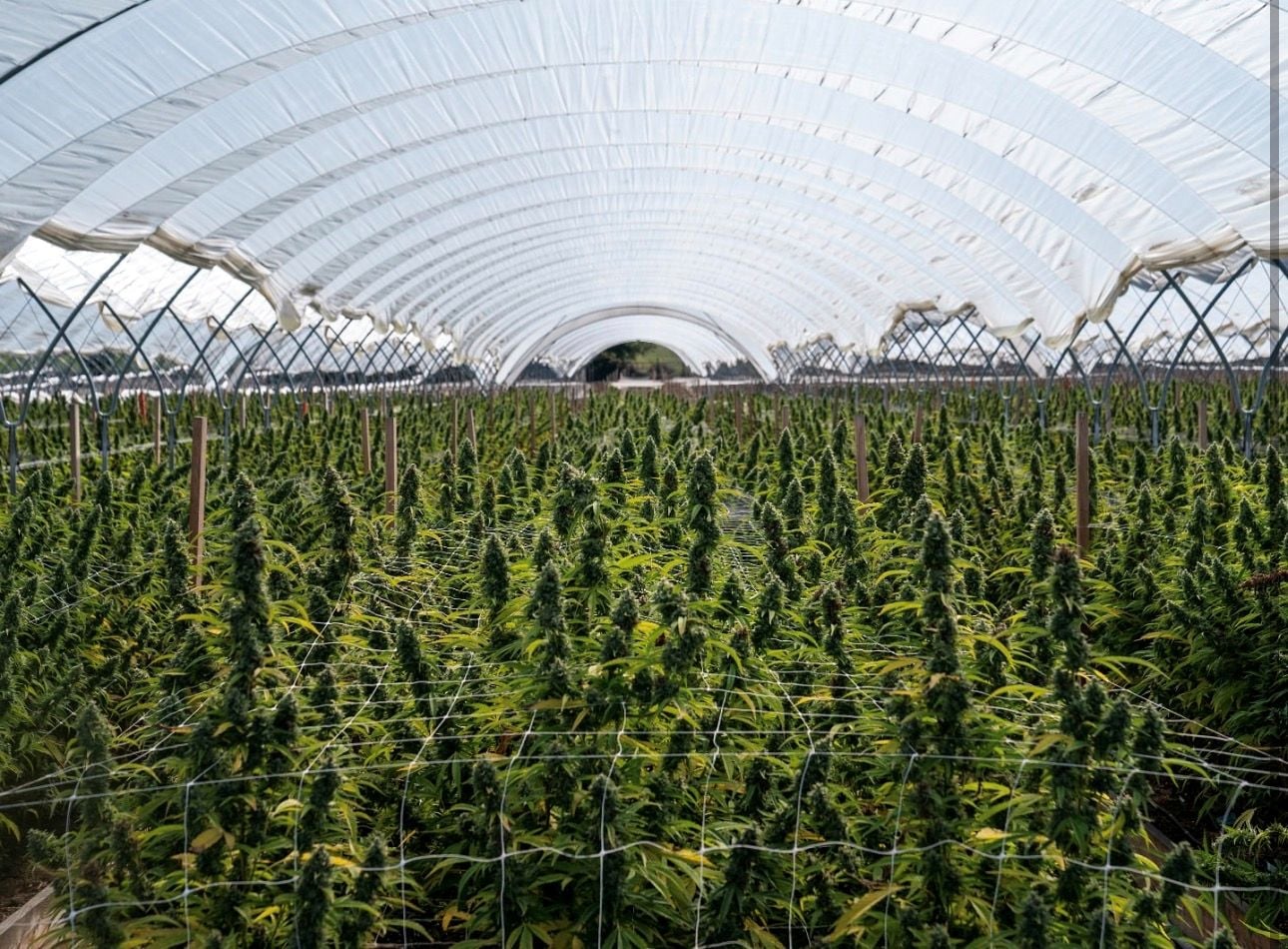
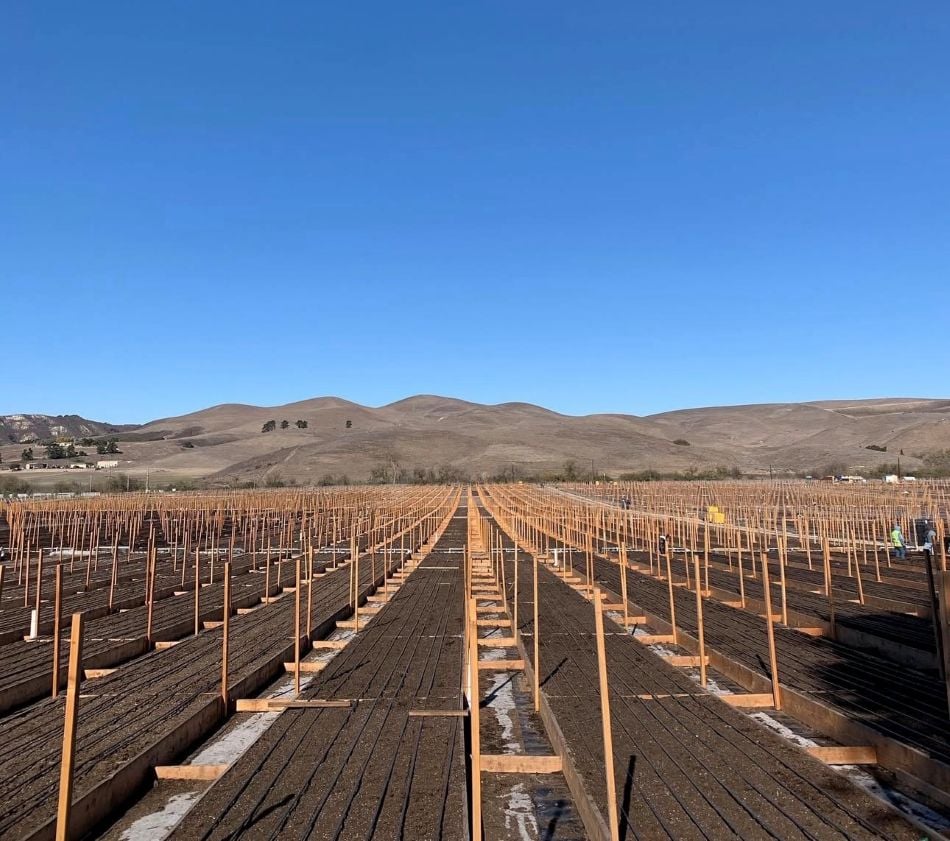
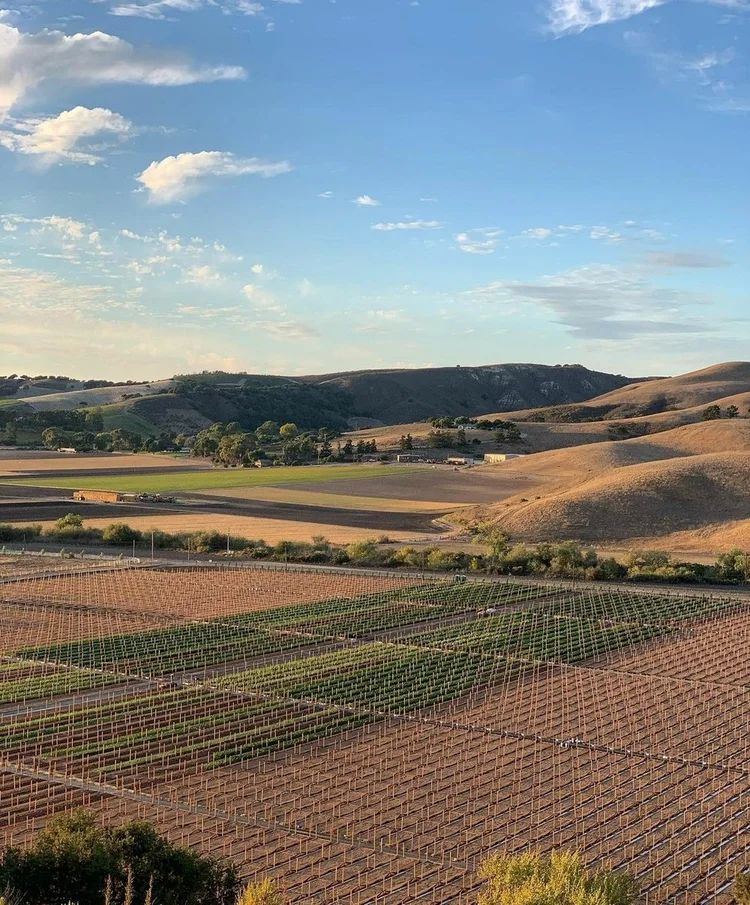
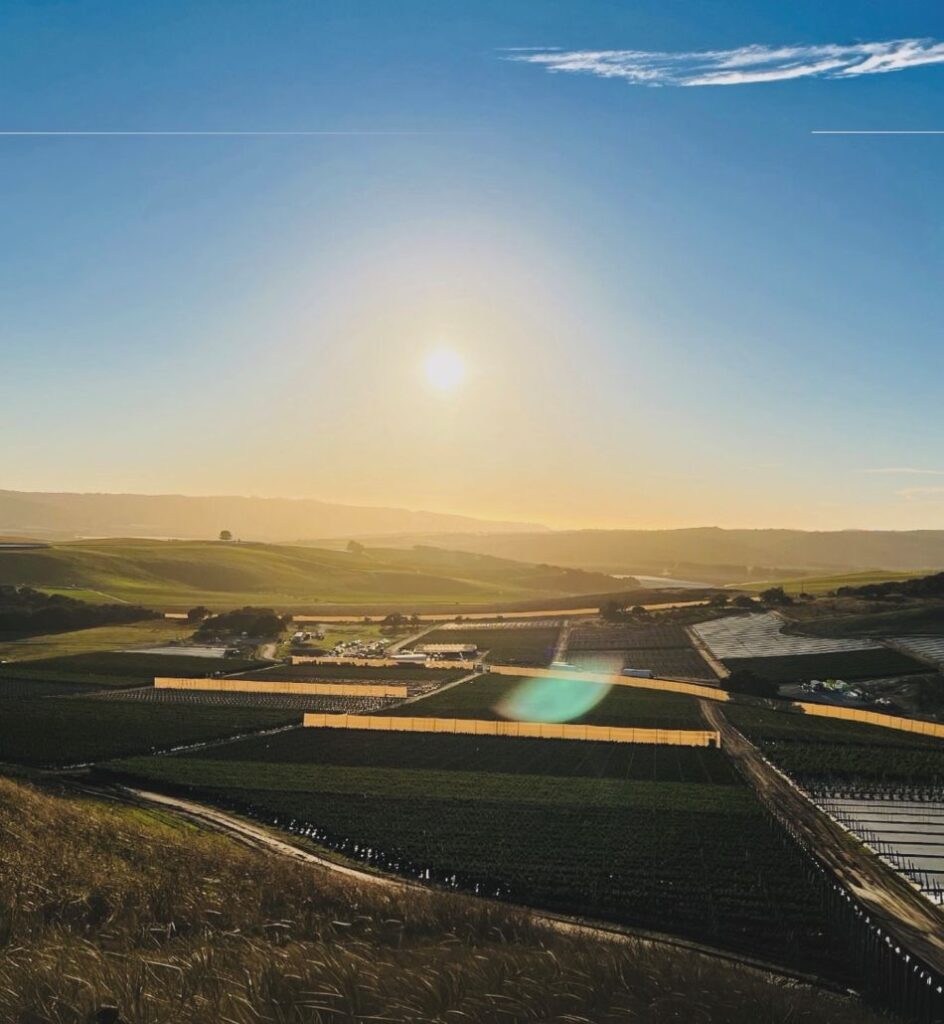
A case study like Los Alamos Gardens matters because it shows what that philosophy looks like when it is forced to operate beyond boutique scale. Forty acres of wooden garden beds built for living soil is not an aesthetic decision. It is an infrastructural one. It means the farm is investing in the biological capacity of the field rather than defaulting to a reductive feed-and-force model. Inputs such as worm castings, guano, seaweed, and crab meal matter because they do real agronomic work. Worm castings contribute stable organic matter, microbial activity, humic substances, and a buffered nutrient profile that supports root-zone life instead of destabilizing it. Guano, depending on source and composition, contributes concentrated fertility and organic complexity that can help drive vigorous plant development when used judiciously. Seaweed offers more than trace minerals; it also contains naturally occurring compounds associated with stress response and physiological support, helping plants better handle environmental fluctuations. Crab meal contributes calcium and chitin, and that chitin matters. It can help stimulate biological pathways associated with plant defense while also serving as a meaningful component of soil-building strategy. These are not rustic props. They are tools for creating a biologically active soil system that can buffer stress, stabilize nutrient availability, support stronger roots, and reduce the dependence on extractive correction.
But living soil alone is not enough. A regenerative field without continuous biological activity is still at risk of becoming an expensive idea rather than a functioning system. This is where cover crop enters, and where too many cannabis operators reveal just how shallow their understanding really is. Bare soil may look tidy. It may photograph well. It may satisfy a certain sterile aesthetic that industrial agriculture has trained people to associate with professionalism. But bare soil is often a wound. Nature does not leave skin open if it can help it. Functional cover crop protects the surface from erosion, moderates temperature, improves infiltration, contributes biomass, suppresses some weeds, and—critically—keeps living roots in the ground. Those living roots continue feeding microbial communities through exudates, maintaining biological momentum between crop cycles and helping build the kind of underground stability that does not show up in a glamour shot but absolutely shows up in resilience. Depending on the species mix, cover crops can also contribute nitrogen fixation, scavenge residual nutrients, improve structure through varied rooting patterns, and create habitat that broadens ecological complexity in the field. In cannabis, where so many farms still treat the land like a sterile stage set reset for each crop, cover crop is more than a practice. It is a philosophical correction. It says the field is not an inert platform for production. It is a living system that should remain alive all year.
Then there is the matter of foliar biology, a category too often reduced to desperation spraying by growers who only notice the leaf once it is already in trouble. But a leaf is not just a solar panel. It is also habitat. The phyllosphere—the microbial environment on leaf surfaces—is its own frontier of plant health. A biologically intelligent foliar program is not merely about coating a plant in inputs and hoping for vigor. It is about supporting a microbial ecology on the plant itself. Beneficial foliar biologicals can help occupy space and resources on leaf surfaces, making life harder for opportunistic pathogens while supporting a healthier, more resilient interface between plant and environment. They can influence stress tolerance, support vigor during transitional periods, and function as part of a larger preventative strategy rather than a frantic last-minute rescue. This is one of the biggest differences between real regenerative thinking and recycled cultivation theater: one asks how to build health before collapse; the other waits for collapse and reaches for a bottle.
Integrated pest management belongs in that same distinction. Real IPM is not pest control with better manners. It is an ecological framework. It begins with scouting, observation, threshold awareness, environmental understanding, and restraint. It asks what pressure exists, why it exists, what conditions favor it, what natural balances are already in play, and when intervention becomes necessary. At scale, this matters enormously. Because the temptation in large cannabis systems—especially those beholden to output pressure—is to flatten complexity and treat every challenge like war. Spray harder. Sanitize more. Overcorrect. Sterilize. But that approach often weakens the system you are supposedly trying to protect. All-natural oil-based solutions, when used within a disciplined IPM framework, can offer meaningful pest suppression while aligning more closely with a biologically intact cultivation model than harsher, more disruptive alternatives. The point is not moral purity. The point is ecosystem integrity. A regenerative IPM strategy attempts to protect the crop without destroying the living complexity that gives the farm its long-term strength.
And still, no one should get misty-eyed here. None of this means anything if the flower is mediocre or what the industry jokingly calls “BOOF”
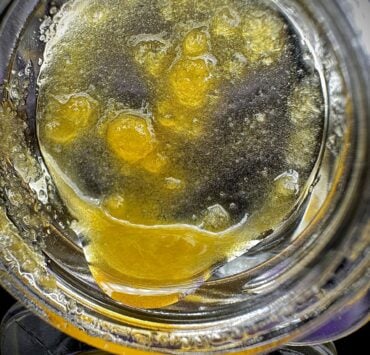
Cannabis remains one of the few industries where people will profess values all day and then, in the final moment of truth, defer to the nose. And they should. Because the nose, the smoke, the resin, the structure, the burn, the flavor, the persistence, the qualitative experience of the flower—these are still among the few things in cannabis that cannot be fully lied about forever. This is precisely why the regenerative conversation has to be anchored not in sentimentality but in performance. A regenerative farm cannot ask for forgiveness because it is ecologically virtuous. It has to produce. It has to express. It has to make flower that matters. What serious regenerative cultivation suggests is not that standards should be lowered in the name of planetary ethics, but that standards should be raised by understanding quality as an outcome of biological sophistication rather than synthetic force. The best cannabis should not merely be attractive at point of sale. It should be the coherent expression of a well-built system.
That is where the industry’s THC obsession becomes not just irritating, but actively destructive.
THC-chasing has done enormous damage to cannabis. It has distorted breeding priorities, flattened consumer education, incentivized laboratories and marketers to serve bad metrics, and trained producers to pursue one-dimensional outcomes that are often unrelated to the most meaningful aspects of plant expression. High THC is not irrelevant. It is just radically insufficient as a quality framework. When percentage becomes king, nuance dies. Breeders are pushed away from complexity and toward simplistic optics. Farms select for test results rather than environmental fit. Consumers are taught to buy numbers rather than experiences. Weak genetics with flashy outputs get rewarded while deeply expressive, environmentally appropriate lines can get overlooked if they do not fit the market’s lazy shorthand. A mature cannabis culture would find this embarrassing. And yet much of the legal market still behaves as though cannabinoid inflation were the summit of sophistication.
It is not. It is adolescence.
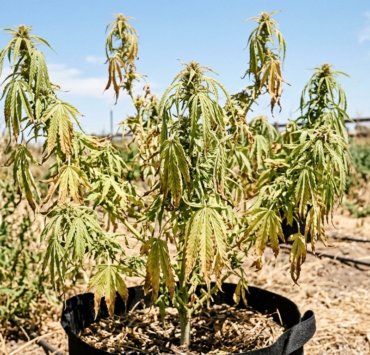
Weak genetics are the other half of the problem. And here, too, the industry often refuses to tell itself the truth. A genetically mismatched plant can be made to survive in a poorly suited environment through relentless intervention, but survival is not the same as fitness. Every time a farm pushes an ill-suited phenotype through a field because the name sells or the tests impress or the market is addicted to novelty, it bakes contradiction into the entire cultivation model. More correction. More rescue. More stress. More expense. More vulnerability. More distance between what the field wants and what the operator is demanding. Regenerative agriculture cannot solve that contradiction by itself. Because regeneration is not only about what you feed the field. It is about what genetics you ask the field to carry.
This is the part the cannabis world needs tattooed on the inside of its eyelids: breeding for the environment IS regenerative agriculture.
A phenotype selected in and for a particular environment has a better chance of thriving with less coercion. It is more likely to express consistently under local temperature swings, humidity, pest load, disease pressure, soil conditions, and seasonal rhythms. It is more likely to maintain quality without requiring extreme intervention. It is more likely to fit the biological logic of the farm. That means fewer expensive contradictions, lower-input stress management, stronger resilience, and ultimately a more honest form of profitability. Not shortcut profitability. Not slash-and-burn profitability. Durable profitability built on a system that fights itself less.
This is why the breeding work embedded in a place like Los Alamos Gardens matters so much. The R&D acreage there has hosted breeding projects with top breeders focused on selecting phenotypes that actually thrive under the conditions of that site—real conditions, not fantasy conditions. That is the future. Not universal hype genetics expected to perform identically everywhere. Not strain names turned into brand mascots and pushed into any field willing to carry them. Plants are not logos. They are local organisms. They respond to wind, light, microbial context, water dynamics, pathogen pressure, and every other piece of environmental truth the market prefers to ignore because truth is slower than hype. Selecting phenotypes under real environmental pressure is not just smart breeding. It is regenerative strategy at the genetic level.
And if that sounds technical, good. It should.
Because too much cannabis writing has been content to stop at slogans. Living soil. Clean green. Sungrown. Regenerative. Craft. These words have been passed around so carelessly they now arrive half-dead in some circles, stripped of rigor by repetition. What gives them life again is specificity. Living soil means microbial and structural complexity. Cover crop means continuous rhizosphere activity, biomass contribution, erosion control, nutrient cycling, and ecological buffering. Biological foliars mean phyllosphere support and preventative resilience. IPM means observation, thresholds, ecosystem literacy, and intervention with discipline. Breeding means adaptation, selection, and reducing contradictions between genetics and environment. Regenerative cannabis at scale means building a coherent biological system in which these pieces reinforce one another rather than pretending that one good practice can compensate for a badly designed whole.
That is the educational burden now facing the serious side of cannabis. Not merely to preach values, but to teach systems.
And that system-level thinking has economic consequences. Regenerative agriculture is often caricatured by skeptics as morally satisfying but financially naive. That critique is lazy. Resilience has economic value. Better soil structure can improve water infiltration and retention. Higher organic matter can buffer environmental stress. More stable microbial communities can help support nutrient cycling and root health. Preventative biological strategies can reduce the likelihood or severity of certain crises. Better environmental fit in genetics can lower the need for constant rescue and correction. None of this makes agriculture easy. Farming will always be vulnerable to weather, markets, labor, compliance, and the thousand humiliations built into trying to make life from land. But systems that are less contradictory, less brittle, and more biologically coherent are not just ecologically superior. They are commercially smarter over time.
So yes, what Jimmy The Chef has helped create at Los Alamos Gardens matters. But not because one farm or one man should become a mascot for regenerative cannabis. They matter because together they help expose a larger truth: that the next serious leap in cannabis will not come from louder branding, bigger THC numbers, or another generation of weak, fashionable genetics pushed through unsuitable systems. It will come from people willing to get serious about biology. Serious about soil. Serious about leaves as living surfaces. Serious about ecological pest management. Serious about cover crops as infrastructure. Serious about breeding for place, not hype.
That is a harder story to sell than “highest THC in the room.” It is also a far more important one.
Jim’s path—from business school to Johnson & Wales, from Europe’s molecular kitchens to Akelarre, from heirloom tomatoes and fava beans to Jorge Cervantes, from legacy California cultivation to prison and back again, from decades of breeding to OBL and then to commercial regenerative cannabis—reads almost too symbolically, as if some novelist were trying too hard to build the perfect archetype for this moment. But maybe that is exactly why it works. He came out of a world that taught him ingredients matter more than tricks. He survived a world that taught him commitment has consequences. He built in a world that taught him genetics are destiny. And now, through a case study location like Los Alamos Gardens, he is helping show that regenerative cannabis is not a soft ideology. It is a hard, technical, agronomic reality. One that demands equal parts humility, discipline, sensory intelligence, and scientific literacy.
The industry should be paying very close attention.
Because if cannabis is ever going to grow up—really grow up—it will have to stop behaving like a teenager showing off lab scores and start behaving like agriculture. Living, dirty, local, complicated agriculture. The kind that understands the field is not a stage, the plant is not a mascot, and quality is not a number. The kind that knows the best future for cannabis will not be engineered through abstraction, but cultivated through relationship: root to microbe, leaf to biology, genotype to environment, farmer to field.
The kind that smells like life, because it is.
All photos credit: www.losalamosgardens.com
Gold Scrolling Footer Ad
reserve your ad hereGold Scrolling Footer Ad
reserve your ad here