Gold Header Ad
reserve your ad hereDeciding whether to grow using organic methods or try hydroponics can often be determined by skill level, available growing space, and the number of plants. I have experimented with both organic and hydro over the years, and below I have highlighted the pros and cons of each, as well as key considerations to keep in mind. This article will also compare which is best for growing between seeds vs clones, and photoperiods, and autos
Organic Methods
Growing organic cannabis requires using soil, compost, worm castings, or creating a custom mix. Many growers will debate that organically grown cannabis is superior to hydro and will produce the best flavors.
The Pros
- Soil is easy to work with and requires very little maintenance.
- You can use plain water with soil and still obtain great results.
- The buds’ taste is smooth and intense.
- Organic gardening is a great starting point for beginners.
- Soil is readily available, and most are designed to support the entire plant lifecycle.
- Organic nutrients complement the soil food web.
- Soil contains beneficial microorganisms, fungi and bacteria.
The Cons
- Working with soil can be messy and cause dirt to grow in rooms.
- Soil can easily be overwatered and take longer to dry out.
- Carrying large sacks of soil can be tiresome and arduous.
- Pathogens can infect soil and produce harmful bacteria.
- Some soils contain too many nutrients for seedlings.
- Not all soil is suitable for growing cannabis.
- Soil needs to be hand-watered every 24 to 72 hours.
Hydroponic Methods
Hydroponic systems involve a soilless inert medium that contains no nutrients, such as rockwool, coco coir, or hydroton clay balls. Hydro systems work by supplying all the necessary nutrients through water using a pump or an air pump.
The different types of hydroponic systems include nutrient film technique (NFT), ebb and flow systems, Flood and drain tables, deep water culture (DWC), and reverse deep water culture (RDWC). Hydroponics can be a challenge if you are not experienced; however, it will pay off big time in terms of yield. Below are the pros and cons of using hydroponic systems at home.
The Pros
- Hydro systems can produce 2-3 times more yield compared to organics.
- You do not need to hand-water your plants frequently.
- There are no bacteria or fungi present, creating a sterile environment.
- A wide variety of hydroponic systems are available.
- Commercial-scale growers can produce huge plants.
- The vegetation time is much shorter compared to the soil.
- Hydro systems range in size from small to large.
The Cons
- Power cuts will shut off air pumps and air conditioning.
- Plants can proliferate, requiring frequent maintenance.
- Hydroponic nutrients can be expensive to buy.
- Air pumps and air stones can produce a significant amount of noise.
- The water temperature needs to be controlled using a heater or chiller.
Seeds vs. Clones
Once you have decided how many plants you will have and if you will use soil or hydroponics, then the next part is to determine whether you will grow cannabis seeds or clones. This is where most of the excitement comes from for a beginner grower, and how many different strains you produce is down to your personal preference. Below is a breakdown of the various options available regarding genetics.
Photoperiod vs Autos
Photoperiods are a factor in cannabis plants that depend on a specific light cycle to change from the vegetative period to flower production. Photoperiod cannabis plants are the most common type, as you have much more control over how long you want to vegetate your plants or train them up, and can be converted into mother plants if necessary.
- Photoperiods depend on either 18/6 to grow and 12/12 to flower.
- Photoperiod seeds are available to buy either feminized or regular sex.
- Most of the strains that seedbanks offer will be photoperiodic.
- Photoperiods can be grown outdoors from Spring until Autumn.
Autoflowering cannabis plants are highly popular, especially for outdoor growers who live in a hot climate. Autos only vegetate for 28 days before they start flowering and can be grown from seed to harvest under any light cycle. Unlike photoperiods, they do not require a specific cycle set on a timer; however, I recommend growing autos indoors under 18-20 hours of light. Autos are also popular due to the fact the autoflower stretch is much shorter and easy to handle for beginner growers.
- Autos are a low-maintenance cannabis plant that grows to a medium height.
- Autos are resilient and sturdy plants that work great in certain conditions.
- They have a fast turnaround time from seed to harvest, around 11-12 weeks.
- Most seed banks offer an autoflowering version of their photoperiod strains.
- They are well-suited for growers with small spaces and grow to a height of around 90-120 cm.
- Outdoors, they can be planted every 30 days, resulting in a perpetual harvest.
Regular Seeds vs. Feminized Seeds
In the past, you could only obtain regular seeds, which meant they would produce either male or female plants. The only way you could tell is by the first few weeks of flowering, when the plants would develop male or female pre-flowers. Not many seed banks offer regular sexed seeds anymore, due to the soaring popularity of feminized.
Feminized seeds revolutionized the cannabis industry when they first came out around the early 2000s. The benefit of growing with feminized seeds was that you didn’t need to worry about increasing male plants, which meant you could be as efficient as possible with your grow space. Feminized seeds are ideal for growers who plan to cultivate on a large scale and those who do not have access to clones.
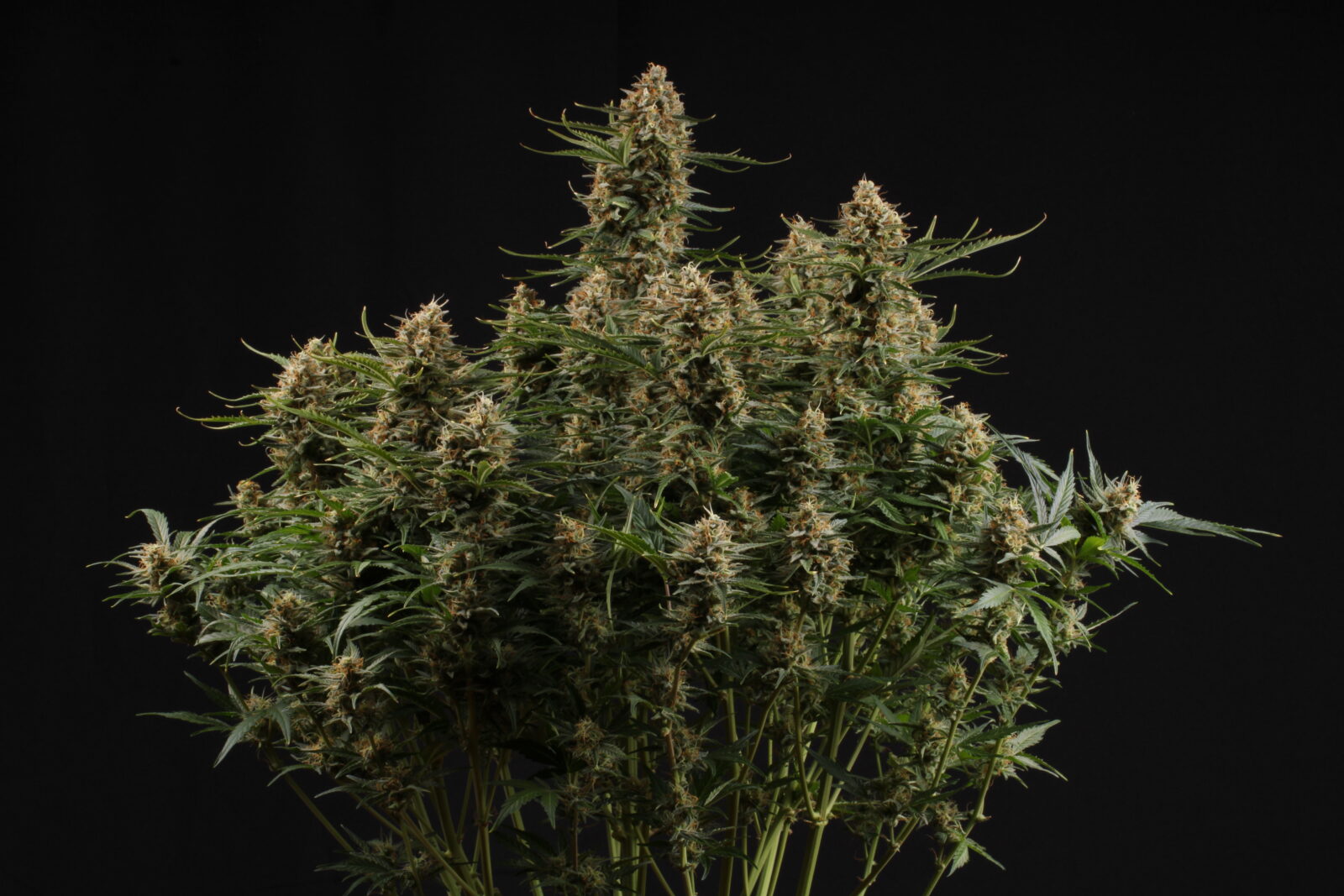
Feature photo: An autoflowering plant that has been indoors using a 20/4 light cycle. Photo credit: Seed Stockers.
Gold Scrolling Footer Ad
reserve your ad here