Gold Header Ad
reserve your ad hereGold Header Ad
reserve your ad hereGrowing cannabis indoors gives cultivators complete control over their plants from seedling to harvest. Unlike outdoor gardens, indoor environments allow growers to closely monitor development and decide exactly when to begin training and pruning.
Combining these two techniques can dramatically improve plant structure, maximize light exposure, and encourage larger, higher-quality yields. When performed correctly, pruning and training help create an even canopy while directing the plant’s energy toward its most productive growth. In this article, I will explain everything you need to consider when training plants, including the different techniques and their associated benefits.
Choosing the Right Time to Begin Training
Timing plays a crucial role in successful plant training. Starting too early can interrupt root development, while waiting too long can make stems less flexible and more difficult to manipulate.
Most growers begin training around the third week of the vegetative stage under an 18/6 lighting schedule. By this point, plants have usually developed strong root systems and flexible stems that can recover from both low-stress and high-stress techniques.
Clones generally respond even better than seedlings because they are more mature and established. Before beginning any training method, ensure your plants are healthy, vigorous, and actively growing.
Tools and Equipment Required for Training
The good news is that you don’t need expensive equipment to shape your plants effectively. For low-stress training (LST), soft garden string or thick plant ties work well for securing branches without damaging them. Sharp scissors or a clean scalpel are ideal for pruning, while topping and stem manipulation can usually be done by hand.
Whatever tools you use, cleanliness is essential. Sterilized, sharp equipment creates clean cuts that heal faster and reduces the risk of infection or disease.
What to Consider
Every training method places a different level of stress on the plant, so recovery times will vary. Topped plants generally begin producing new growth within three to five days. Branches that have been gently tied down usually return to vigorous growth after two or three days.
More aggressive methods, such as stem crushing or super cropping, require significantly longer recovery periods. Expect plants to need approximately seven to ten days before they fully recover. Allowing sufficient recovery time is essential. Applying repeated stress too quickly can slow growth, reduce yields, or increase the likelihood of plant health problems.
Successful Plant Training
A thoughtful approach will help your plants recover quickly while delivering the best possible results. Although thin gardening wire is commonly available, it can gradually cut into expanding stems as plants mature. This may restrict growth or even damage branches. Soft string, coated wire, or reusable plant ties are much safer options because they support branches without digging into the stem.

Training sessions should be spaced apart to give plants time to recover before additional work is carried out. If plants appear stressed or growth slows noticeably, allow several days of uninterrupted recovery before performing further pruning or training. Healthy, actively growing plants respond much better than those already under stress.
Turn Pruned Branches into New Plants
One of the biggest advantages of pruning is the opportunity to create clones. Healthy branches removed during pruning can be rooted to produce genetically identical plants for future harvests. Many indoor growers maintain a separate vegetative space specifically for rooting cuttings, ensuring a continuous production cycle with fresh plants always ready for the next flowering run.
My Final Thoughts
Pruning and training are two of the most valuable techniques available to indoor cannabis growers. When performed at the right stage of growth and followed by adequate recovery time, these methods can improve plant structure, maximize available light, and increase overall harvest quality.
Whether you’re working in a compact grow tent or managing a larger indoor garden, incorporating these practices into your routine can help produce healthier plants, more efficient canopies, and consistently better yields over successive harvests.
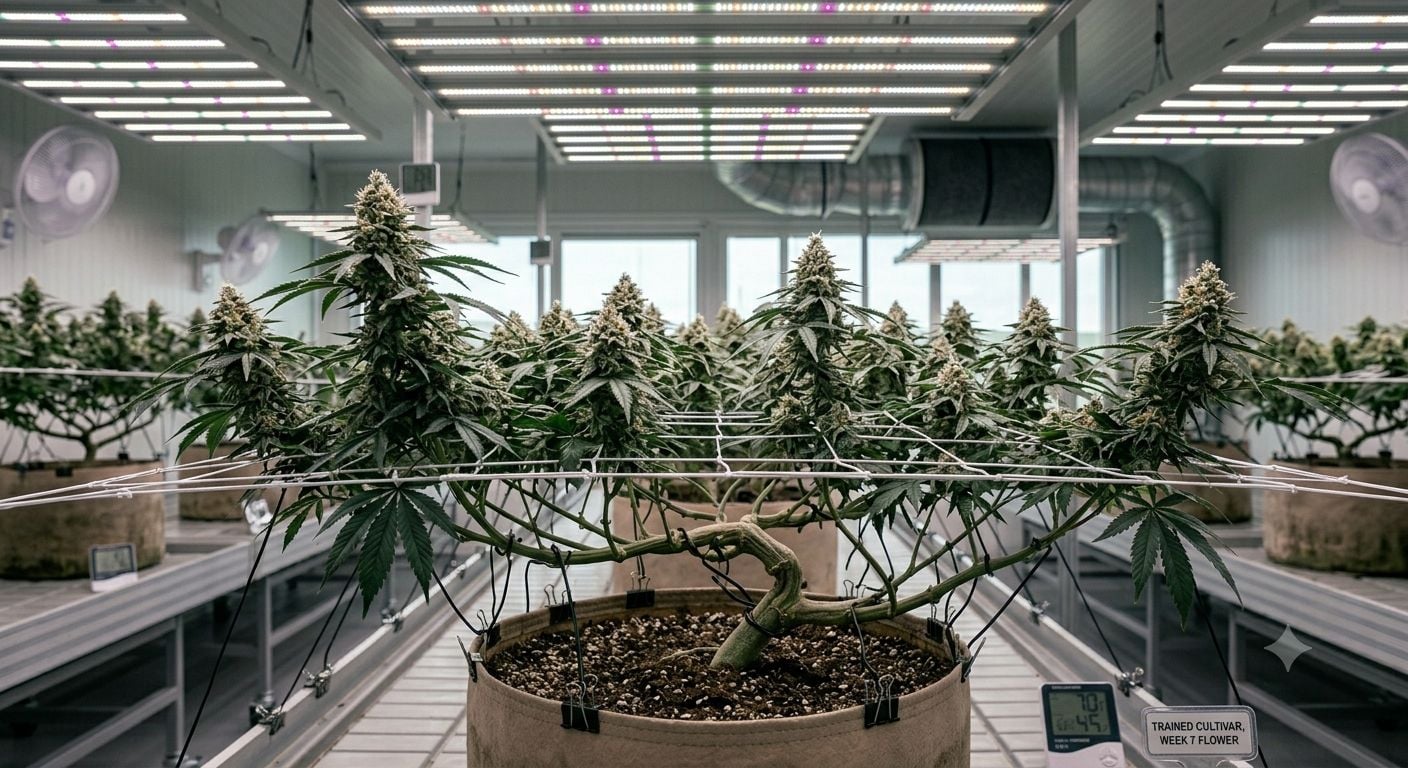
Feature image: A well trained cannabis plant late in flower.
Gold Scrolling Footer Ad
reserve your ad here