Gold Header Ad
reserve your ad herePeople remember their first real Hawaiian weed the way they remember their first real love, or their first real punch in the mouth. You can ask a thousand smokers the same question and watch the same thing happen before they even start talking. Their expression changes, they smile, or laugh, or shake their head just a little, because they’ve just remembered something irreplaceable
You might hear, “Best I ever smoked. Still remember the day. Haven’t found anything like it since.” Most people still think about it, and are still chasing it
That reaction matters, because Hawaiʻi did not become a cannabis legend through branding, hype, or clever strain names. It became a legend through reality … through land, through sun, through time, and through people who learned how to grow in a place that punishes arrogance and rewards patience. Cannabis did not stop being the world’s finest. It was bottlenecked, hunted, mislabeled, diluted, and interrupted. Da kine was quietly pushed out of circulation until the legend turned into a rumor for people who arrived later.
Most of the world only ever knew the postcard version. Maui Wowee as a tourist punchline, Kona Gold as a rumor, and Puna Bhudda as a mythical legend. That version is easy to sell, easy to parody, and easy to dismiss. The real Hawaiian has always been something else. The real story is more defined and more brutal.
- MONGOOSE THINKING
If you live here long enough, you learn about mongoose thinking. Somebody once brought mongooses to Hawaiʻi to solve the rat problem. It sounded smart, but not so much. The only problem was that rats run at night and mongooses hunt during the day. Wrong solution, wrong timing, and wrong understanding of how things actually worked. The mongooses adapted anyway, spread across the islands, and ate whatever they could, and Hawaiʻi paid the price … We still have a rat problem.
That pattern repeats here over and over again. Large outside solutions arrive confident, clean, well-funded, and “modern.” They ignore local reality, create damage, and locals are told to live with it again and again. Cannabis has been living inside mongoose thinking for decades.
What almost never gets discussed is how cannabis shifted socially before it was criminalized. In plantation Hawaiʻi, labor camps were cultural mixing pots. Chinese workers lived alongside Japanese, Filipino, Portuguese, Puerto Rican, and Native Hawaiian laborers. Food, language, religious practices blended. Cannabis also blended in quietly. It was not exotic, it was practical.
By the early twentieth century, authorities noticed … not because of widespread public harm, but because of racial framing. Across the mainland United States, anti-cannabis laws were tied to anti-immigrant narratives. The same pattern reached Hawaiʻi. Cannabis became linked in official rhetoric. What had been agricultural and medicinal became criminal by narrative.
The Marihuana Tax Act of 1937 did not originate in Hawaiʻi, but it landed here the same way it landed everywhere else, through federal pressure and stigma. Cannabis did not disappear overnight, it retreated into quiet circles. That retreat matters, because it marked the beginning of bullshit. Before prohibition, cannabis in Hawaiʻi was integrated into agriculture. After prohibition, it became hidden. This is the moment where pakalolo became a subculture. Still, everybody grew it along with their other crops, even if they didn’t smoke it themselves.
- I AM A WITNESS
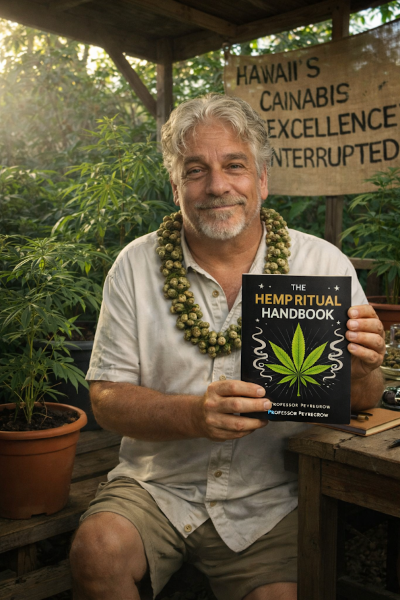
I am a witness. A cultivator, a breeder and an activist. I came here over thirty years ago trying to build a life for my daughter and found myself in a training ground. I didn’t come up in warehouses, I came up in the jungle carrying lime, fertilizer, and bales of promix through Uluhe fern. Digging inches deep in muck before hitting lava. Learning how to hide plants without hiding the sun. Learning rotor sounds before sight. Pressure shaped the plant. It shaped the people harder.
I am a witness to a story that didn’t start with a ‘drug war,’ it started with an illegal overthrow. As a resident and a cultivator, I stand in the clear knowledge of what Dr. Keanu Sai has documented: that the Hawaiian Kingdom remains a Sovereign Nation under a prolonged and illegal military occupation. This isn’t ‘activist’ rhetoric; it is a matter of international law and active treaties with over 15 nations that were never extinguished. Even President Clinton’s 1993 Apology Resolution admits that the Native Hawaiian people never relinquished their claims to their inherent sovereignty. I live and work in the reality of the State of Hawaiʻi and I have personally felt the weight of the federal government, all the while remembering that I am standing on occupied ground. I am not here to extract value from this place like a corporate carpetbagger; I am here as someone who recognizes the kuleana to the land and the Nation that was here long before the first C-130 landed on a tarmac.
My own path into this world began with Mike Ruggles. We worked together as movers in Las Vegas more than thirty years ago. Later as masons. He was already known (infamous, including the cops) in the Big Island cannabis world. When he told me Hawaiian weed was different, that it was on another level, I believed him. When he said I’d always have a place if I came out, that mattered.
I didn’t leave when Mike left Vegas because my daughter, Tyler, was born. But eventually the pull was stronger than Las Vegas. I believed I could build something better in Hawaii. I left with the idea of returning stronger, but I never intended on returning. That choice carried consequences that still weigh on me.
When I arrived, Mike took me into the jungle and taught me guerrilla cultivation. Real cultivation, not warehouse replication. Not catalog genetics but land-based growing under pressure, environmental pressure and law enforcement pressure—and the pressure was constant. Everything I built afterward, including earning my agriculture degree here, rests on that foundation.
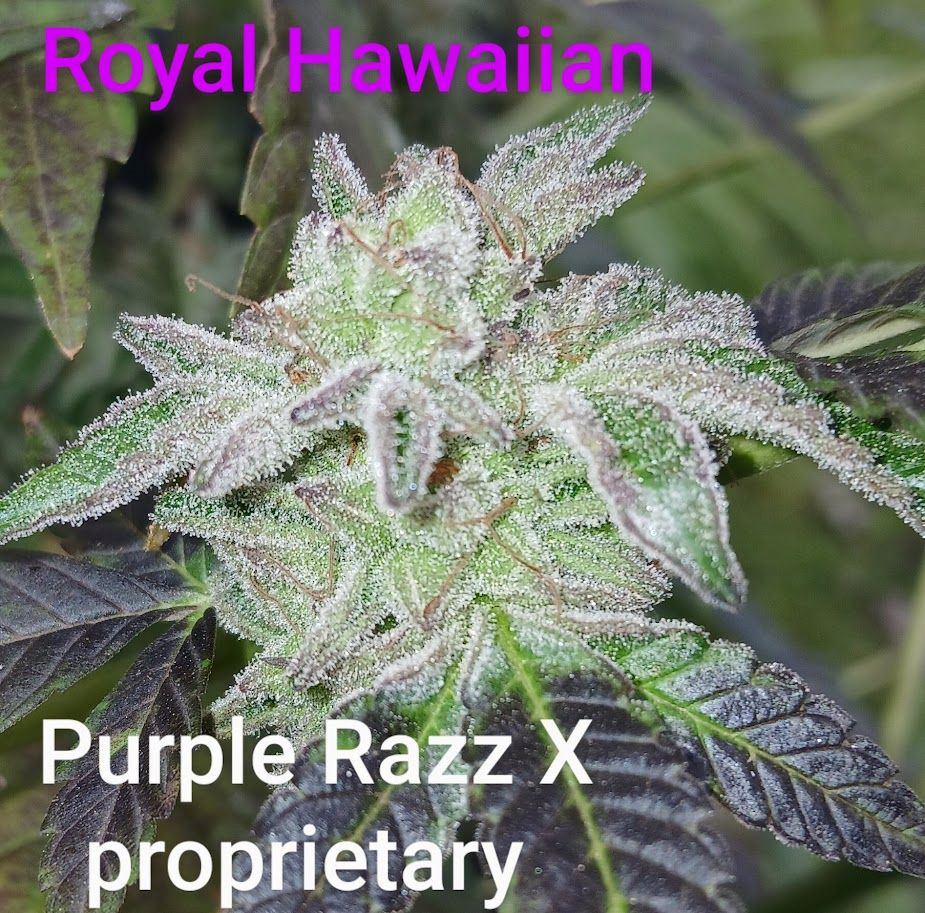
III. ENFORCEMENT AS A BREEDER
Green Harvest was not neutral enforcement. It was psychological conditioning. When helicopters fly low over rural communities year after year, it does not just remove crops. It trains populations, and it teaches people to internalize fear. It makes what should be ordinary agriculture feel criminal. It changed the whole vibe of the ‘aina (land.)
In Puna, in Kona, in valleys across Maui and Kauaʻi, rotor noise became seasonal. Growers learned to look up before they looked forward. I could identify aircraft models by sound. That is not law enforcement, that was an invasion. That the war on weed. Green Harvest also created artificial scarcity. When entire crops were cut and removed, supply shock drove prices upward. Risk premiums rose. Cannabis became more profitable precisely because it was targeted. This incentivized larger grows, more secrecy, and more organized protection. The system escalated itself.
The genetic consequences were long-term. Tall, long-flowering tropical cultivars became liabilities. Visibility became lethal and time became risk. Tropical “sativas” that once had room to stretch ten feet into full sun were replaced by compact hybrids that could be hidden more easily. Slow maturation was once an asset in Hawaiian condition but became a liability. Enforcement shortened the plant’s evolutionary path.
I lived through the Green Harvest years. I did not need myth to understand what was happening; I could see the selection pressure in real time. Plants that finished faster survived. Plants that stayed compact survived. Growers adjusted not because the land demanded it, but because helicopters did. Over time, those adjustments compounded. What people now call “modern Hawaiian genetics” were shaped as much by survival strategy as by preference. Enforcement didn’t just remove plants, it redirected breeding decisions across an entire generation. Law enforcement did not intend to become a breeding force but prohibition made it one anyway.
- THE BOTTLENECK OF MODERN GENETICS
One of the quiet tragedies of modern cannabis is genetic bottlenecking. Walk into dispensaries across the mainland and you’ll see the illusion of diversity—hundreds of strain names, bright packaging, rotating menus. But peel back the marketing and you’ll find the same narrow ancestry repeating over and over again. Cookies, OG, Gelato, Kush derivatives (don’t forget the Diesel) stacked on top of Kush derivatives. Slight phenotype variations sold as revolutions like the citrus shuffle. That is not biodiversity, that is inbreeding disguised as innovation.
True diversity comes from isolation, adaptation, and time. Hawaiʻi once had that in abundance. Independent island development and microclimates separated by lava flows, as well as elevation and rainfall. Growers selected for what worked locally, not what photographed well under purple LEDs. When prohibition intensified, that diversity compressed. When indoor production became prevalent, it narrowed further. Speed replaced character and yield replaced resilience, and unavoidably … bag appeal replaced depth.
Hawaiʻi is cannabis excellence. It lost ground and strains got lost because the global market stopped valuing evolutionary diversity. It began rewarding replication. That is why Hawaiian heirlooms matter now more than ever. A true heirloom Hawaiian line is not just rare, it is foundational. Each island once carried its own expressions that were never meant to be crossed (not always.) Those lines contain combinations of traits that modern markets have never properly explored because they were shaped under different conditions such as: long seasons, full-spectrum sun, volcanic soils, and ocean wind. Pressures that were natural, not electrical.
The heirloom Hawaiian lines I work with were entrusted to me by one particular grower, Heime Cheeba, original breeder of the legendary Kauaʻi Electric. He handed those Hawaiian lines to me, not as a transaction but as an honor and responsibility . It was more like a relay baton than a seed transfer, it felt like an Olympic torch. He vetted me for three years under a ghost profile until he revealed who he really was. The agreement was simple: breed them true and make them available to the world. The responsibility handed to me is now my life’s mission.
These lines were created and refined here in Hawaiʻi decades ago unlike mainland hype strains, or catalog genetics, but island-developed expressions shaped by local conditions for generations. They are not caricatures of “pure sativas,” they are balanced Hawaiian cultivars that evolved here. My role has not been to reinvent them, but to preserve their structure, stabilize their traits sometimes, and ensure they are not diluted into a genetic bottleneck dominating modern markets.
If preserved, even fragments of those lines can generate hundreds of new expressions when crossed thoughtfully. Not novelty for novelty’s sake, real breeding through . genetic expansion. Hawaiʻi shouldn’t chase the next hype cross, it already holds the keys to the kingdom. I’m not talking nostalgia, I’m talking Punnett squares (math.)
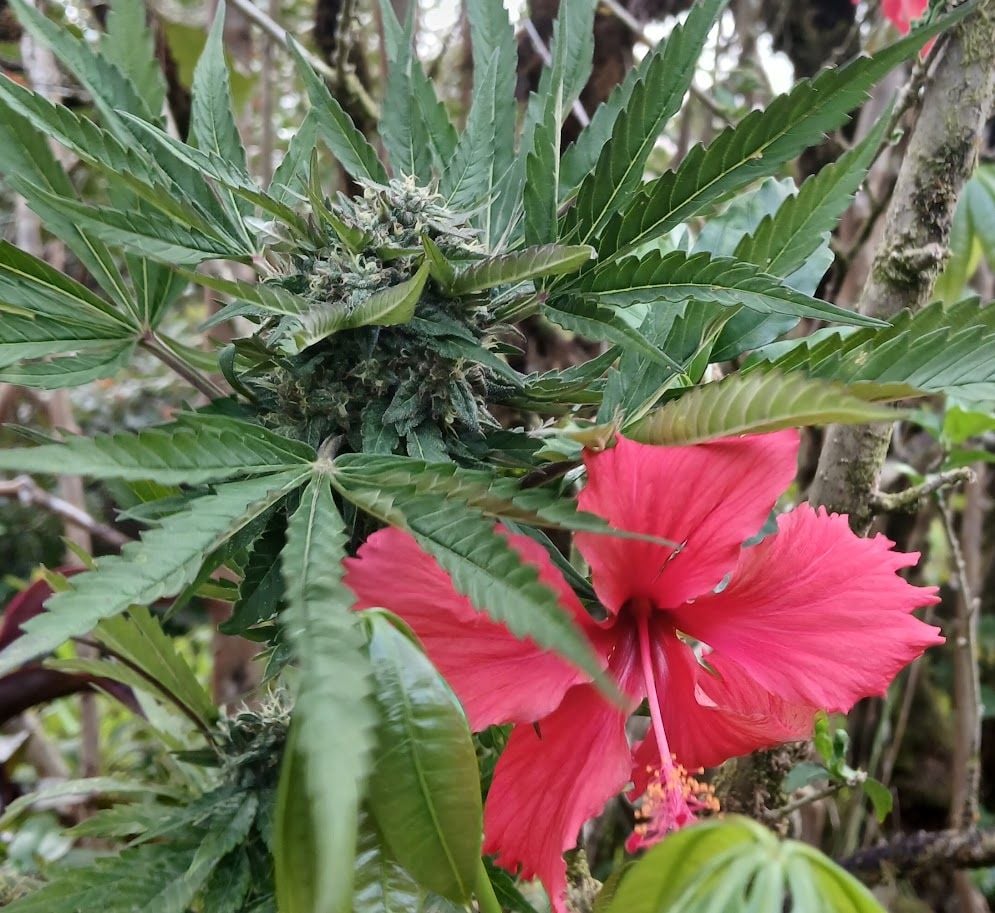
- OUTDOOR EVOLUTION VS INDOOR STAGNATION
Indoor cultivation gives the illusion of control. Temperature fixed. Humidity regulated. Light spectrum programmable. Every variable engineered. It feels scientific because it is measurable. But control is not evolution.
Outdoor cultivation in Hawaiʻi forces interaction. UV intensity varies by elevation. Rainfall shifts by valley. Soil biology differs block by block. Wind stress alters structure. Plants respond. Only the adaptable reproduce. Over successive generations, those pressures stack. Micro-adaptations accumulate. Lines become more resilient. More expressive. More stable in real-world conditions.
Indoor rooms do not create that pressure. They preserve existing traits. They can refine phenotype selection, yes. They can maximize yield under constraint. But they do not drive adaptive change the way multi-generational outdoor selection does in a stable tropical environment. This is why Hawaiʻi functions as an R&D environment whether people recognize it or not. It is a year-round evolutionary laboratory with conditions that cannot be replicated artificially at scale.
Hawaiʻi sits below the Tropic of Cancer. The sun angle is steeper. The spectrum is richer. Even on the shortest day of the year, Hawaiʻi receives more biologically useful ultraviolet light than many mainland regions get on their longest day. Indoor growers now bolt UV fixtures onto million-dollar rooms trying to recreate what the sun here does for free.
Elevation adds another layer. On the Big Island and Maui, cultivation can happen above the inversion layer. Below it, light is softened. Above it, the air thins, UV intensifies, and plants respond. That’s Hawaiian physics.
- THE ARCHITECTURE OF EXCLUSION
When Hawaiʻi implemented vertical integration for medical cannabis, it created exclusion. It did not create safety, rules don’t make cannabis safe. In other states, cultivators can grow and sell wholesale to dispensaries. They can specialize, they can build small brands, they can move at their own pace. Vertical integration over here, requires full-stack infrastructure for cultivation, processing, and retail before entry at a huge cost.
That’s prohibition disguised as regulation. It is filtration. It filters out small operations and legacy growers. It filters out, in effect, Hawaiian cannabis culture. It favors capital density (money) over agricultural experience (the people.) When you combine that with limited license counts, you do not create a free market. It’s called controlled capture.
Eight vertically integrated licenses became the magic number. It didn’t make sense agriculturally or culturally, it just made capture manageable. Public meetings talked about a million dollars. Private reality required two, three, sometimes ten million just to bleed long enough to survive. And in the end, instead of expanding opportunity for others, dispensaries expanded locations. Consolidation grew while pretending access improved. Social equity? What social equity?
Before vertical integration filtered growers out with paperwork, the system filtered them out with felonies. Mike Ruggles did not just grow cannabis. He fought the system openly.
Rick Damerville was the lead prosecutor on the Big Island. Known locally as a courtroom gunslinger with a reputation for rarely, if ever, losing. That reputation shaped plea deals. It shaped the psychological pressure surrounding cannabis cases for years.
Mike was originally charged with 37 felony counts for allegedly running an illegal medical marijuana dispensary. Thirty-seven. The stacking alone created the appearance of catastrophic exposure and potential decades of prison time. The number was designed to intimidate. That is how charge stacking works. It is leverage disguised as procedure.
The day before trial, all but two of those felony counts were dropped. That detail matters. When the state begins with 37 felonies and walks into trial with two, it reveals something about the original charging decision. It suggests strategy over substance. Pressure over proportionality.
Mike did not walk into that courtroom with a high-priced defense team. He did not rotate attorneys. He went pro se, representing himself standing before a jury against a prosecutor who had built a career on winning. He was acquitted by a jury of his peers. Real social equity.
That verdict was not just personal. It punctured the mythology of inevitability surrounding cannabis prosecutions on the island. It demonstrated that the machine was not untouchable.
Mike also took two separate cases to the Hawaiʻi Supreme Court, forcing structural review of how cannabis prosecutions were being handled. The Damerville case carried consequences serious enough that both Rick Damerville and Judge Nakamura retired shortly afterward.
This was a man battling between local cultivation culture and state enforcement architecture.
Meanwhile, the people who actually fought the war on weed lost time, freedom, families, and futures. Arrests over seeds. There were freedom fighters that cracked narratives. Roger Christie, Dwight Kondo, John Adler and Aaron Anderson, they were not symbolic battles. They reshaped reality.
Hawaii hemp regulation followed the same pattern of sabotage. Hawaiʻi grows world-class agricultural products, yet hemp rules require flower and resin to leave the islands, be processed on the mainland, and shipped back before they can be sold here. For what? Meanwhile, China floods the world with cheap isolate and Hawaiʻi calls this compliance. That is not regulation, it is prohibition disguised as paperwork.
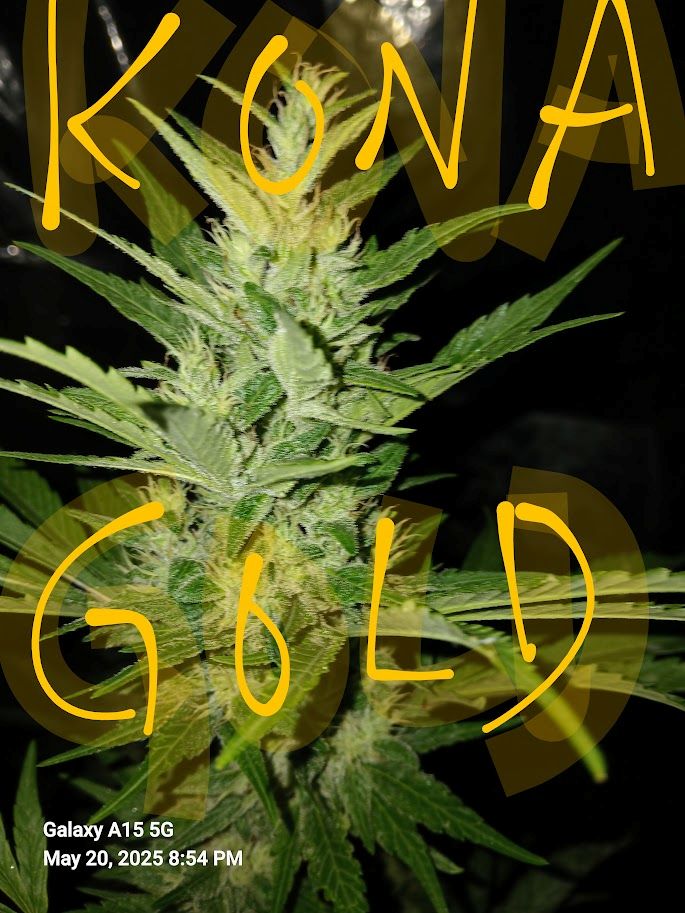
VII. GLOBAL POSITIONING & THE SHORELINE
The cannabis market is global now whether regulators admit it or not. Germany imports tons of medical marijuana from Canada. As the Caribbean is organizing frameworks, South America is positioning for volume. Africa is entering medical supply chains. Yet, too many discussions about cannabis in Hawaiʻi fixate on local tourism revenue, local medical market totals, or how many dispensaries fit on a single island.
Those are small pieces of a much larger pattern.
Germany legalized adult use in 2025 and continues to dramatically expand medical imports with annual volumes in the tens of thousands of kilograms. Jamaica and Barbados have all adapted their laws to allow possession, decriminalization, or regulated medical use that changes the stage for future export and import activity. They understand that cannabis is a legitimate agricultural export, much like coffee, spices, or tropical fruit. The question is how.
Volume production is not Hawaiʻi’s lane, it will never be because land is limited and labor is expensive. Hawaii’s infrastructure is constrained. Competing on mass production would be mongoose thinking all over again. But genetics? Breeding? Seed? Reference-quality cultivation? That’s a whole different story.
Global markets will source genetics from somewhere. If Hawaiʻi does not document and protect its heirloom lines now, they will re-enter circulation later under someone else’s stabilization, branding, and ownership. Genetic capital moves quickly once it leaves its point of origin. Whoever defines it first becomes the reference point.
Hawaiʻi does not need to flood the world with flower. It can influence the world through seed and breeding programs that reintroduce diversity into a narrowing system. Hawaii will have limited flower. Scarcity is leverage. The world market is not a distant future, it is already taking shape. Hawaiʻi needs to reckon with it, not just celebrate local sales numbers.
VIII. CULTURE AS INFRASTRUCTURE~THE HAWAIʻI CANNABIS EXPO AND ALL THINGS CANNABIS
If you want to understand whether Hawaiian cannabis culture is alive or just nostalgic, you don’t start with legislation. You start with where people gather.
For years, the Hawaiʻi Cannabis Expo has functioned as something more important than a trade show. It became a cultural checkpoint. A place where growers, breeders, patients, activists, and legacy operators could stand in the same room without pretending Hawaiian cannabis began with eight licenses and a compliance manual.
The Expo did something subtle and powerful: it kept continuity alive. Knowledge moved face to face. Genetics moved hand to hand. Arguments were presented by speakers that happened in public instead of in whispers. Standards were debated, old guard and new guard collided and collaborated. That matters in a place where prohibition tried to fracture trust for decades
The Expo also created gravity. When competitions like the Aloha Cup emerged, when parallel events began forming on the same weekends, that wasn’t fragmentation, it was proof of vitality. You don’t splinter something that’s dead, you splinter something that has momentum.
If the Expo is the visible bridge between past and present, then Kalapana is the anchor. At Uncle Robert’s in Kaimū, the annual All Things Cannabis gathering isn’t branding, it’s lineage. That stretch of Puna isn’t symbolic, it’s sacred ground. Puna Budder isn’t a marketing name there, it is its birthplace. Puna pride. Meaning: this is ours.
All Things Cannabis is not about investor panels, it’s not about pitch decks, it’s about community, history, elders (Kanaka Maoli,) growers, musicians and families. We talk story. Stories that never made it into court transcripts or business plans.
The Expo translates culture forward and Kalapana anchors it backward. Together, they prove something the legislature still struggles to understand: Hawaiian cannabis is not a product category, it is a living system demanding space in public after decades of being forced underground. And that public presence is key to our future. Because when culture gathers openly, it creates pressure. It makes it harder for policy to pretend history doesn’t exist. It reminds regulators that compliance is not culture.
Most importantly, it reminds everyone watching that Hawaiian cannabis did not vanish. It adapted, it reorganized, it learned how to show up without forgetting where it came from. That is not nostalgia, that is the power of people … that is Hawaiian cannabis culture.
The Hawaiʻi Cannabis Expo later created a public-facing extension of that continuity. It was not perfect or unified, but it was real. Culture is what allowed knowledge to survive Green Harvest. And culture preserved fragments of lines that would otherwise have vanished. Culture maintained the standards that markets later pretended to invent.
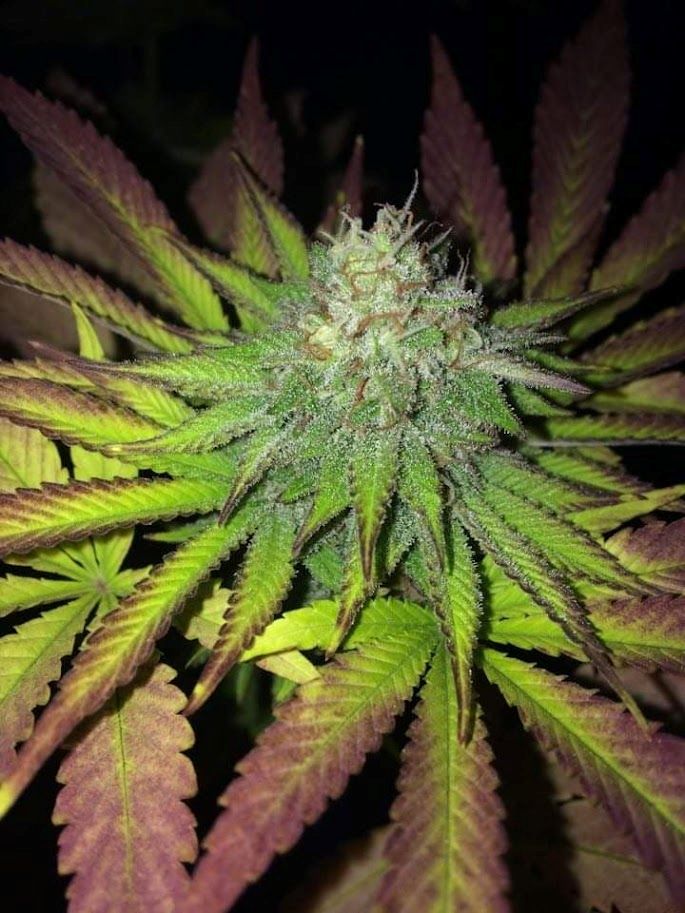
- THE PEOPLE WHO BUILT IT AND WHAT IT COST
Before cannabis became policy, it was people. Long before expos, licenses, and investor pitches, the real engine of production in Puna and by extension the state, were local growers, men and women who knew the land, knew the rain cycles, and knew how to move through the bush without leaving a trail. They weren’t making strains, they were feeding their Ohana (family.) They were refining lines quietly, season after season.
Green Harvest did not just remove plants. It pushed those growers out.
Helicopters did what helicopters always do: they escalated risk. When backyard cultivation became normalized after Ballot Question 1 passed at the ballot (even though it was later overturned in the courts), the landscape changed again. People believed it was safe to grow 24 plants. Later, medical licenses allowed 10 plants per card, up to five cards — 50 plants legally in a backyard. The era of deep-jungle guerrilla cultivation shifted. For many of the old guard, the equation stopped making sense.
Why risk helicopters and felony stacking when California offered scale, money, and relative safety? Many left and they took knowledge with them. They took fragments of genetics with them. Some faded and some rebuilt elsewhere. The ecosystem thinned. That thinning was not just economic. It was cultural.
The THC Ministry case was not symbolic. It was a federal indictment. I was the last single holdout in that case. They put us on a perp walk in front of the C-130 that they transferred us from the Big Island to Honolulu. It was on the news. It was on the front page. It was supposed to be the last marijuana trial—that’s what Roger proposed. But the Feds never said he was a danger to society; they just never let him out on bail like they did for the rest of us. He sat in the Federal Detention Center across from the airport while we fought from the outside. Eventually I leveraged the United States government into dropping conspiracy charges in exchange for pleading to charges that had not even appeared in the original indictment. Later, after violating probation due to medical use tied to rat lungworm symptoms, I sued the federal government pro se. That lawsuit put me back on the front page again.
During the federal escalation, my younger daughter, Kehena, was taken back to the mainland by her mother -strategically, deliberately-because we understood how federal leverage works. Children become pressure points. We refused to allow that. That decision protected her. It cost time that cannot be repaid. Generational damage is not abstract, it lives in missed years. My missed years with my daughter.
I remain close with Roger Christie today. Closer than many who vanished once legal exposure became real. Activism, for some, was principle. For others, it was an opportunity. Pressure reveals the difference.
The same principle applies to genetics. Heime Cheeba, original breeder of the legendary Kauaʻi Electric, handed those lines to me not as a transaction but as a responsibility. It was less a seed transfer than a relay baton — or an Olympic torch. The agreement was simple: breed them true and “share them with the world.”
That responsibility is my life’s work.
- THREE FUTURES
Hawaiʻi is at a hinge point, and I don’t mean that in a poetic way. I mean it the way a farmer means weather, the way a builder means a foundation. Whatever we build now is what people will be stuck with for a long time, because capital adapts fast and regulation sets like concrete. Time is most important in this equation, and the global market is not waiting for us to get our feelings sorted out.
There are three futures from here. They are not theories. They are the real forks in the road.
1) FUTURE ONE: MONGOOSE THINKING RETURNS
This is the familiar mistake: big outside “solutions” arrive confident and well-funded, full of templates imported from somewhere else, and the people who actually live here are told to deal with it. The framework gets built around fear, compliance theater, and control instead of agriculture, stewardship, and common sense. The rules look clean on paper, but they ignore local reality the same way the mongoose plan ignored the fact that rats run at night. The results are predictable. Small operators get filtered out at the door. Legacy growers get thanked in speeches and excluded in practice. Genetics get taken, repackaged, and reintroduced under somebody else’s name. The plant survives, because the plant always survives, but the cream doesn’t stay here. Wealth gets extracted, culture thins, and they call it “progress” because the paperwork says we did something.
2) FUTURE TWO: LEGALIZATION, BUT STILL CONTROLLED EXTRACTION
This is the future where Hawaiʻi legalizes, tourism explodes, dispensaries multiply, and the industry looks successful from the outside because money is moving and everyone can point to numbers. People get jobs. Some locals get a seat at the table. The problem is the table was designed for consolidation from the beginning, so participation is allowed mostly through gates, tiers, and permission slips. Vertical integration and limited access don’t disappear, they just soften their language. Export eventually becomes real, but it routes through the same few chokepoints, and the deeper advantage Hawaiʻi actually has—breeding, seeds, evolutionary R&D under our sun—stays underdeveloped because the system rewards short-cycle commerce more than long-cycle kuleana (stewardship,) This future isn’t a total loss, perhaps it’s just not the win we deserve. Hawaiʻi participates in the global cannabis economy, but it doesn’t become the reference point it should be, and the people who carried this plant through the worst decades still don’t get first claim on the future they paid for.
3)
FUTURE THREE: PAKALOLO PARADISE, BUILT LIKE AGRICULTURE
This is the one where we stop pretending cannabis is some alien category that needs its own logic system, and we regulate it the way we regulate tomatoes, potatoes, and strawberries—because that’s what it is: a plant that requires soil, light, water, labor, and stewardship. Farmers farm, processors process, retailers retail, breeders breed. Small operators can enter without needing a million dollars and a lawyer. Quality competes on its own merits, and excellence rises naturally because Hawaiʻi is excellence. In this future, legacy growers are not treated like a sentimental footnote; they are treated with the respect they’ve earned because they preserved genetics, knowledge, and culture when there was no formal protection at all. In this future, export is not an afterthought; it is initially designed for, with safeguards that keep genetic capital from being stripped out and rebranded somewhere else (trademarked.) In this future, we protect heirloom lines, we fund real breeding programs, we keep processing local, and we let our sun do what it always does. We don’t have to invite investors; they’ll come anyway. The point is not to chase capital. The point is to design a system where Hawaiʻi keeps the cream, where culture and biology are aligned, where the people of the land are not watching their own future get exported.
Now here’s the part nobody wants to say out loud: the world is going to want what we produce here no matter what framework we select. Hawaiʻi is the jewel. Hawaiʻi’s environment is unique. Hawaiʻi genetics carry an advantage that can’t be copy-pasted, and canna-tourism here is going to be the most obvious “pink elephant” in the room once adult-use is real. The only question is whether we build a system that keeps that wealth circulating here, or whether we build another extraction story with better branding.
That’s why I’m not writing this for investors. Fuck the investors. They don’t need an invitation. I’m writing this for the next generation the kids coming up, the new farmers, the new breeders, the new builders of culture—and I’m writing it for every legislator, mayor, councilmember, governor, and attorney general who will someday claim they didn’t know the real history, the real pressure, and the real stakes. Now they know. This is the record. This is the blueprint.
And if we’re serious about doing the right thing for the right reasons, then we also have to name the moral reality: prohibition harmed people, families, and communities, and a just framework puts the people who carried the plant through that era—people like Mike, Roger, and countless others at the top of the list, not in the footnotes. That is not charity, that is simple accounting.
If we choose mongoose thinking again, we will get mongoose results. If we choose agricultural logic, kuleana, and continuity, we can become the reference point for the world instead of another cautionary tale. The future isn’t hypothetical, it’s already late.
- THE FUTURE OF HAWAIIAN CANNABIS
I am focused on the future of Hawaiian cannabis, a future where the market doesn’t stop at the shoreline. We have sacrificed. Everything in this article is true and important and needs to be said and we now have one chance to get this right. When a constitutional amendment is passed to grant the right to possess cannabis, the framework will be left to the legislature. If they do not include important components like export considerations and, most critically, consideration for those harmed by past prohibition … People like Mike, Roger, and countless others who served time, were arrested, or lost critical things in life, we need them at the top of the list.
The solution is not complicated. Agriculture already has a framework for managing perishable crops, quality control, food safety, and distribution. Cannabis does not need a separate logic built on artificial scarcity and concentrated control.
Vertical integration was presented as a safeguard. In practice, it functions as a barrier. It requires full-stack infrastructure (cultivation, processing, and retail) before entry. That requirement does not protect the public. It filters participation. It favors money over people. It narrows opportunity at the front door rather than expanding it responsibly.
In other agricultural sectors, farmers grow, processors process and retailers retail. Quality competes on its own merits. The system allows specialization and gradual scale. Cannabis can operate under the same principles without sacrificing oversight or safety. The difference is design.
Legacy growers carried this plant through prohibition. They absorbed enforcement pressure. They preserved genetics. They maintained cultivation knowledge in conditions that offered no formal protection. They do not only require access; they require priority. If Hawaiʻi is serious about continuity, those who sustained the plant during its most vulnerable decades should be automatically included, given first-in-line opportunity, and provided with structural support like reduced costs during legalization.
Corporate participation is inevitable. Capital will enter any legitimate agricultural market. That is not inherently negative. The issue is balance. A system built exclusively for scale ignores common sense. A system that permits multiple tiers; small farms, cooperatives, specialized breeders, processors, and retailers allows excellence to emerge organically.
Cannabis cultivation is labor-intensive. Distribution is complex. Breeding is long-term work. When regulation mirrors agricultural logic instead of enforcement logic, quality rises naturally. When regulation mirrors prohibition in softer language, nothing changes. Distortion continues.
The objective should not be controlled for its own sake. It should be aligned with biology, environment, and existing agricultural standards. This alignment mirrors the Hawaiian concept of the Ahupuaʻa (a traditional Hawaiian system where land and resources, from the mountains to the sea, are managed as an interconnected whole. This ancient wisdom emphasizes good stewardship and allows each elevation and environment to excel at what it does best.) This is the perfect model for cannabis in Hawai’i.
Let the plant function within the agricultural framework that already exists. The rest will sort itself out.
A properly designed, open agricultural system is an economic inevitability that benefits everyone. The world market is vast; if Hawaiʻi removes artificial barriers, everyone … from local businesses to the larger corporations seeking entry stands to gain financially, far exceeding expectations. This is not just about making money; it is about embracing Hoʻoponopono (the Hawaiian way of doing the right thing for the right reason.) We must lead with integrity, publicly apologize for the historical wrongs and harms of prohibition, and, in that spirit of reconciliation, commit to spreading Aloha. Enacting this system rooted in agricultural wisdom and cultural healing, Hawaiʻi will be the shining star for the world, proving that a moral and profitable path is possible for all.
Best I ever smoked. That’s how this story started. If you know, you know. If you don’t, you deserve to.