Gold Header Ad
reserve your ad hereFor much of legal cannabis history in the U.S., the industry sold consumers on raw product, and flower was the centerpiece. Loose cannabis in jars and mylar bags was the standard, and much of the experience revolved around the ritual of selection, grinding, rolling, and smoking.
But the latest data suggests that the market is moving in a different direction.
In 2025, pre-rolls overtook flower in unit sales for the first time in the States, becoming the top-selling cannabis product on the market by volume. The category generated nearly $3.6 billion in revenue, sold 383.2 million units, and posted 9.8% year-over-year revenue growth compared to the broader market’s growth of just 1.5%.
The significance of that shift goes beyond one category beating another; it suggests cannabis is increasingly behaving like a mainstream consumer packaged goods market.

Why Pre-Rolls Are Winning the Modern Consumer
Pre-rolls are, by design, one of the most CPG-friendly products in cannabis. They are standardized, portioned, packaged, portable, and easy to merchandise. They can be sold as singles, premium specialty items, or multi-packs. They allow for strong brand expression through customization and packaging design. They are intuitive for consumers in a way that loose flower often is not, especially to the novice consumer.
That evolution is visible in the 2026 Custom Cones USA State of the Pre-Roll Market report: multi-packs have become the dominant force in the category. In 2025, 48.5% of all pre-roll SKUs were multi-packs, and even more notably, 90 of the top 100 products sold were multi-packs.
That is textbook packaged-goods behavior.
Consumers are increasingly buying cannabis in bundled, repeat-use formats rather than one-off products. The leading multi-pack format, a 2.5-gram 5-pack, generated $612 million in revenue on its own. This kind of format wins because it lowers the price-per-preroll cost and encourages stock-up behavior.
At the same time, branding is becoming more important in the modern pre-roll market. According to the report, potency, price and brand are now the top three factors consumers care about when selecting pre-rolls. Yet 59.8% of producers still use unbranded cones, leaving a major opportunity on the table.
That gap is revealing. Consumers are increasingly behaving like packaged-goods shoppers, but many operators are still producing like commodity sellers.
The top brands are not making that mistake. All five of the top pre-roll brands in the country use custom-printed filters and/or external wraps, ensuring brand recognition even after the product is removed from its package. In other words, they understand that the product itself is part of the branding experience, not just the outer box or tube.

How Pre-Rolls Became a Bigger Business
The growth of infused pre-rolls reinforces this shift toward premium CPG logic. Infused products accounted for $1.68 billion in revenue in 2025, or about 47% of category sales dollars, and posted a staggering 27.8% unit growth. That is similar to how premiumization works in other consumer markets: once a convenient format becomes mainstream, brands begin layering on stronger experiences and higher-end features that lead to premium pricing.
Even the market’s emerging opportunities look like packaged-goods adjacencies. Premium filter tips, though currently tiny at just 0.03% of total pre-roll sales, offer a premium sensory experience that helps pre-rolls stand out. Pre-rolled blunts, once thought of as a niche segment, appear more significant when broader product naming conventions are included, accounting for more than $148 million in revenue nationwide.
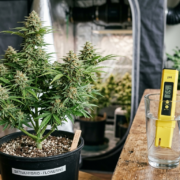
On the production side, the trend is equally clear. More businesses are scaling with specialized machinery, standardizing grind consistency, improving sifting and building more repeatable manufacturing processes. These are not the hallmarks of a purely craft product category, they are signs of industrialization and process-driven growth.
That does not mean cannabis is losing its culture, it just means the industry is growing up commercially. Consumers still care about potency, strain and overall experience, but they increasingly want those things delivered in a polished, reliable and easy-to-buy format.
This is one reason pre-rolls have become so important, they are the bridge between cannabis culture and modern retail behavior.
The category also reflects an important truth about mainstream consumer adoption: most people do not want more complexity. They want simplicity, clarity and convenience, and pre-rolls meet those expectations better than almost any other cannabis format.
Looking ahead, the report projects pre-roll sales will reach $3.8 billion to $4 billion in 2026, with longer-term growth pushing the category above $5 billion by 2030. It also predicts multi-packs could grow to 60% of all products within five years.
If that happens, the future of cannabis will look less like a specialty purchase and more like a mature consumer category: packaged, branded and built for repeat buyers.
Flower may still be iconic, but the future of retail cannabis looks increasingly ready to smoke, ready to share and ready for dispensary shelves.
Feature photo credit: Jae Anh.