Gold Header Ad
reserve your ad hereGold Header Ad
reserve your ad hereFew things are more frustrating than seeing healthy plants struggle through extreme temperatures while being slowly damaged by insects. This article explores which common pests to watch for, how heat stress affects outdoor cannabis plants on hot summer days, how to prevent it outdoors this year, and my top tips.
Pests To Look Out For
Outdoors, insects and pests are inevitable, and doing everything you can to stop them from damaging your plants is essential. Below are the three most common pests you may encounter when growing cannabis outdoors, along with the methods to prevent them.
Spider Mites
Spider mites are among the most destructive pests, especially during flowering. They thrive in warm environments and are difficult to eliminate due to their hard bodies. You need to act on the facts if you notice spider webs on your outdoor plants. Spider mites can multiply into hundreds of thousands and thrive in hot climates.
A highly effective natural solution is to introduce predatory mites, such as Phytoseiulus persimilis, which feed on spider mites. This prevents the need to spray your flowering plants with insecticides or neem oil.
Caterpillars
Caterpillars are common and often go unnoticed until damage appears. They consume leaves and buds, leaving behind waste that can harbor harmful pathogens. Large outdoor cannabis plants can attract caterpillars, who will eat their way through the buds and hide inside the plant’s foliage.
One of the most effective treatments is Bacillus thuringiensis, a natural bacterium that becomes toxic when ingested by caterpillars. While soapy water can also work, Bacillus thuringiensis is preferred, especially during flowering.
Whiteflies
Whilst they may seem harmless, and a shake of a leaf can cause them to fly off, these small, white insects are relatively mild compared to other pests, but can multiply quickly. Left unchecked, they can become a nuisance.
One way to deal with whiteflies attracted to your plants is to spray with a diluted 3% food-grade hydrogen peroxide solution, or use organic repellents such as neem oil or insecticidal soap to help control them.
What Is Heat Stress?
Cannabis plants naturally lose water through their leaves via transpiration. When temperatures are too high and humidity is too low, this process becomes inefficient, making it difficult for plants to absorb enough water and nutrients.
Outdoor cannabis plants will be exposed to high daytime temperatures during the summer season, which is when they are most likely to experience heat stress.
How Heat Stress Affects Cannabis Plants
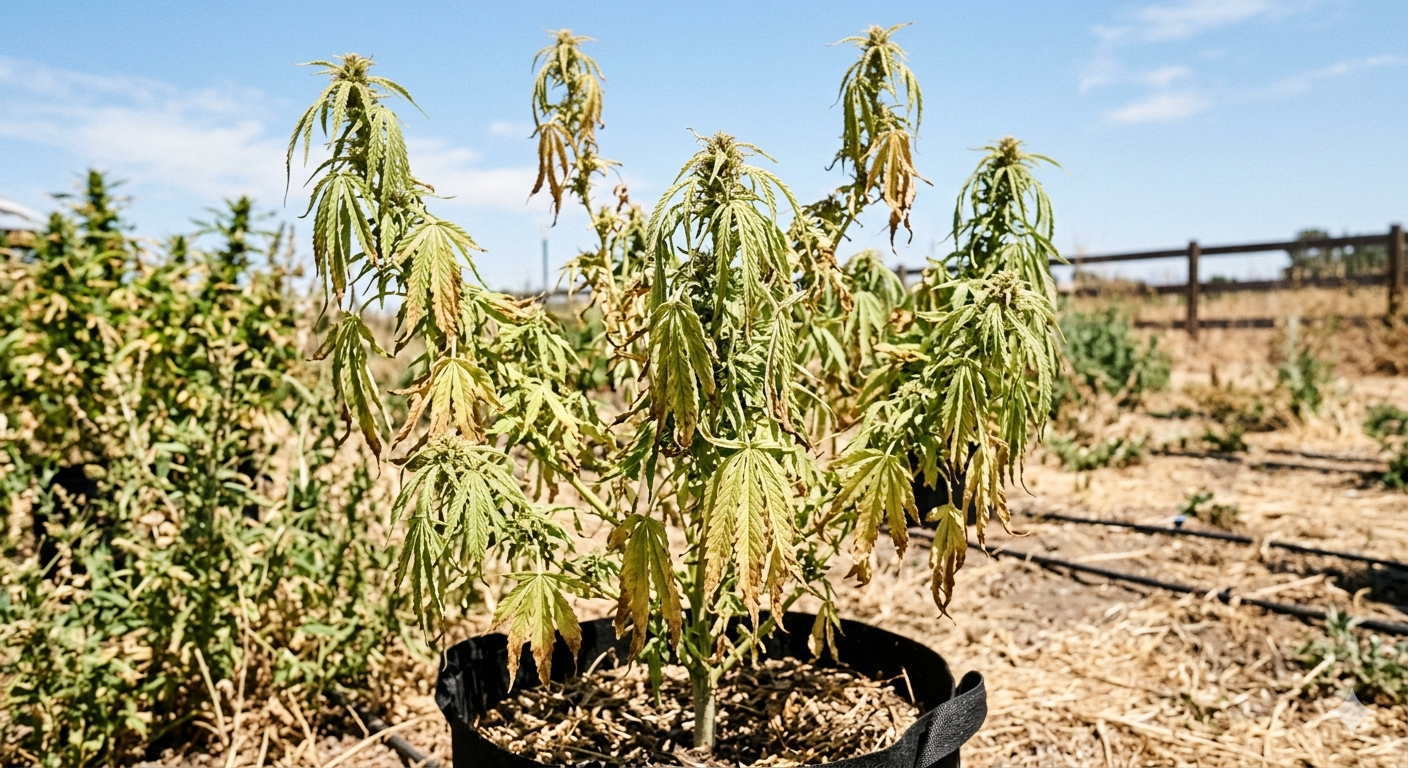
When exposed to prolonged heat, cannabis plants begin to alter their physical structure. Leaves may droop or curl inward as the plant attempts to reduce its exposure to intense sunlight. Combined with dry winds, these conditions can quickly overwhelm the plant.
As a result, photosynthesis is reduced, leading to slower growth, loss of color, and an overall dry, weakened appearance. If left unaddressed, heat stress can significantly impact plant health and final yields. Below is a list of symptoms to show that your outdoor plants are heat-stressed.
Signs of Heat-Stressed Outdoor Cannabis Plants
If you think that your outdoor plants may be suffering from heat stress, then have a look at the list below to see if you can identify any of these symptoms.
Leaf tips curling inward
The leaves of your plants will begin to curl inwards, creating a taco appearance. At this point, the plants are trying to reduce the amount of light they receive.
Slow or stunted growth
Your plants will appear to grow slowly and exhibit stunted growth. This is not due to a pH problem, but how the plants respond to high temperatures.
Wilting fan leaves
Fan leaves will not seem as perky and pointy as usual, and over time, the fan leaves will begin to wilt and droop. Do not get confused by thinking the plants are under- or overwatered.
Thin foliage
When rubbing the leaves of your plants with your finger and thumb, you will notice that they feel very thin, dry and brittle. Insects will be more prone to attack your plants when the leaves are weak and do not possess a thick and waxy appearance.

Nutrient Deficiencies
Due to the plant needing to slow growth and metabolism down to cope with the outdoor heat stress, nutrient deficiencies will begin to occur.
Reduced yields
July and August can be roasting months for outdoor growers, when plants are flowering. High temperatures can cause cannabis plants to produce lower yields and a lower overall quality of buds.
Airy buds
Heat stress can be one of the main reasons why the buds of an outdoor cannabis plant look and feel airy and light. Even with the perfect amount of nutrients and boosters, the buds will have an elongated, foxtail-like appearance and minimal density. 420seeds advises that a single hermie can pollinate an entire grow room or garden, and can do so remarkably quickly.
My Top Tips for Outdoor Heat Stress
Shading Nets
The great thing about shading nets is that they still let plenty of light into the canopy, and keep the air around the plants much cooler. You can set the net above the plants from 12 – 5pm during the blistering hot days.
Avoid Foliar Spraying
Spraying plants during intense sunlight can cause leaf burn. While it may seem like a good way to cool them down, it’s safer to spray after sunset, when temperatures have dropped. Wait until the sun has set before you water your plants.
Optimize Watering Times
Watering early in the morning or later in the evening allows plants to absorb and retain moisture more efficiently. Avoid watering during the hottest part of the day, as water can evaporate quickly and offer limited benefit.
Feature photo: An outdoor cannabis plants that has suffered badly with heat stress.
Gold Scrolling Footer Ad
reserve your ad here