Gold Header Ad
reserve your ad hereWhich Is Best…Sea of Green or SCROG?
Growing Cannabis successfully comes down to choosing the right method for your space, experience level, and goals. Based on the legal plant count in your state, some growers prefer a high number of smaller plants. In contrast, others focus on cultivating a few large, heavily trained specimens. Two proven techniques that work exceptionally well indoors and have helped me achieve spectacular yields are Sea of Green (SOG) and Screen of Green (SCROG).
Although their names sound similar, these two approaches differ greatly in structure, maintenance, skill requirements, and harvest timelines. Below, we break down both methods, explain their advantages, and share practical tips to help you get the most from your grow and decide which method is best for you!
The Sea of Green (SOG) Method Explained
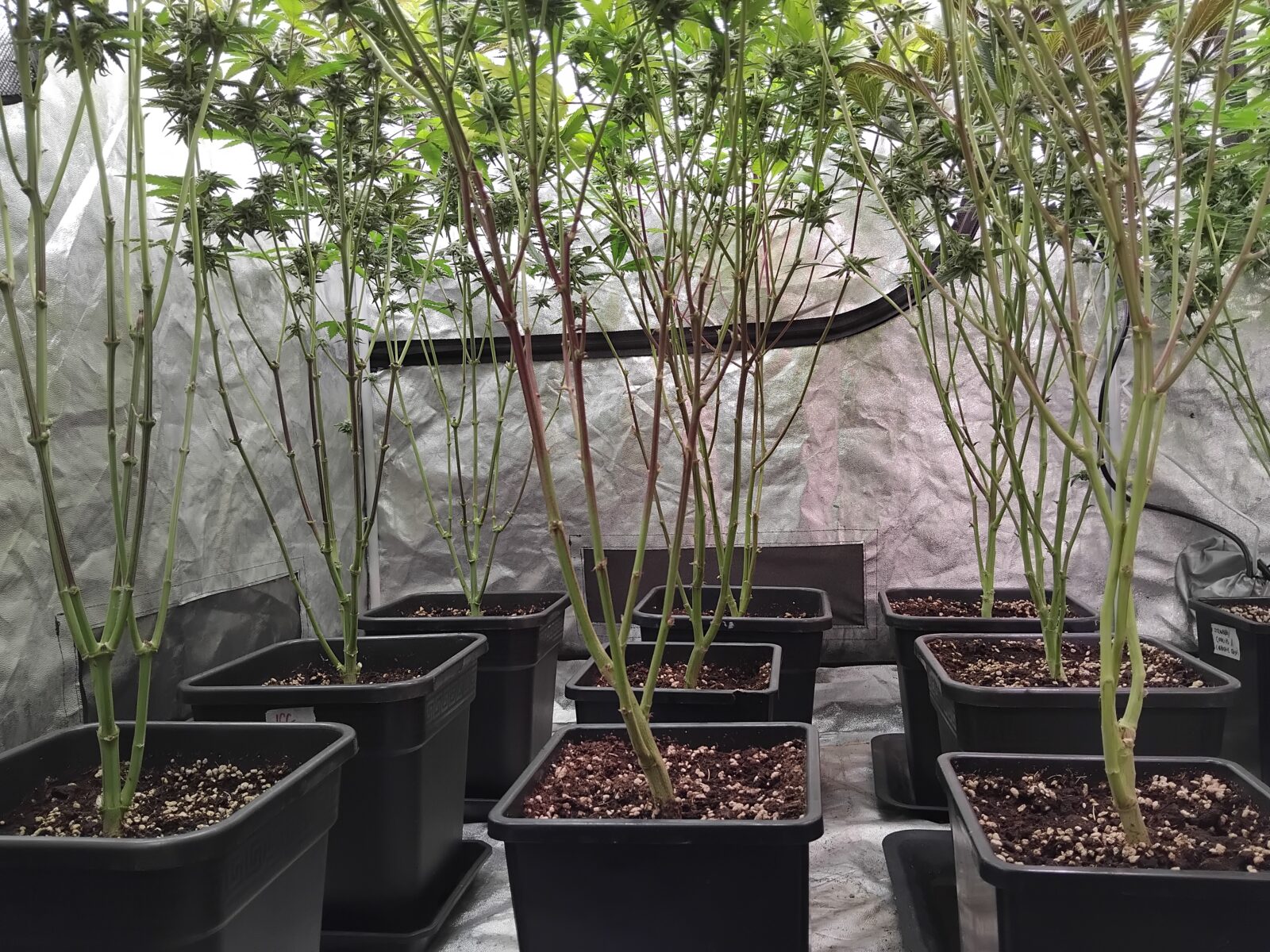
Sea of Green is a cultivation method designed to maximize space by growing many small plants close together. Instead of allowing plants to vegetate for 6–8 weeks and grow large, SOG shortens the vegetative stage and moves plants into flowering quickly. The goal is to create an even canopy of main colas forming a “sea” of buds.
For example, in a 3 x 3 meter grow room, plants are typically arranged in a grid pattern, with enough space between rows to allow airflow and easy maintenance access. Leaving a walkway or central corridor makes feeding, inspecting, and handling any emergencies much easier.
So What Is the Best Pot Size for SOG?
For a SOG setup, 2- to 2.5-gallon pots work best. Plants are arranged in square formations and in symmetrical rows of 3, 4, 5, 6, and so on, depending on how ambitious you are and your budget. The exact number depends on your available space and legal limits.
- 3 x 3 grid = 9 plants
- 4 x 4 grid = 16 plants
- 6 x 6 grid = 36 plants
- 7 x 7 grid = 49 plants
Vegetative Time Under 18/6
Vegetative time depends on whether you’re working with seedlings or clones. With the SOG method, you must keep the vegetative period as short as 2-3 weeks for seedlings.
- Clones: 7–10 days of vegetative growth is usually sufficient before switching to 12/12.
- Seedlings: 14–21 days is recommended to establish healthy roots and structure.
Clones are often preferred in SOG because they grow uniformly and already have established root systems. You must also consider that the shorter the vegetation period, the less electricity and nutrients are used, reducing costs.
What Are the Benefits of SOG?
- Very short vegetative period
- Reduced electricity and nutrient costs
- Faster room turnover (often 9–10 weeks, depending on strain)
- Simple setup with minimal plant training required
- Ideal for limited vertical height
- Plants do not exceed 100cm tall
-

Pots should be kept closely together to produce a uniform top canopy. Photo credit: Bull Sutherland.
My 3 Top Tips for SOG Growing
Whilst it is easy enough to fill a grow space from wall to wall, set your timers, and the rest is history, there are a few factors to consider. Below are my tips to help you get the most out of your SOG grow space.
Choose the right strain
Compact, uniform, fast-flowering varieties perform best. Avoid overly stretchy genetics. High-yielding autoflowers also work very well because they stay short and flower regardless of the light cycle.
Plan your spacing carefully
Leave enough room for airflow and maintenance access. Make sure you account for the space around the edges of the grow room to avoid overcrowding and make it difficult to work inside.
Clones Are Best.
From my experience, SOG works best with well-rooted clones. The reason is that after 10 days, vegetation clones become robust and hardy, and can flower much sooner than seedlings. If you are focused on achieving as many harvests as possible each year, working with a fast-flowering clone is optimal.
The Screen of Green (SCROG) Method Explained
Screen of Green takes the opposite approach. Instead of many small plants, SCROG uses a screen or net positioned above the pots to train plants horizontally across the grow space. Branches are guided through the mesh and spread outward using cannabis training techniques such as topping, pruning, low-stress training (LST), and super cropping.
The aim is to create a completely even canopy so every bud site receives equal light exposure. Compared to the SOG method, SCROG requires more time, patience, and hands-on involvement, but the reward can be extremely impressive yields from just a few plants.
What Is the Best Pot Size for SCROG?

Because you’re growing fewer plants, they need room to develop large root systems. Indoors, 10-15 gallon pots are ideal, as they are large enough to develop a prolific root system capable of producing high yields. In a 1.2 x 1.2 meter grow space, 2–4 large plants are typically sufficient for a full SCROG canopy.
Vegetative Time Under 18/6
- Around 8–12 weeks of vegetative growth is required
- Time for roots to fully establish and to train the canopy
- Plants need to be well established and guided through the screen
So What Are the Benefits of SCROG?
- Extremely high yields from a small plant count
- Maximized light efficiency and canopy control
- Ideal for growers with plant count restrictions
- Develops hands-on cultivation skills and experience
- Creates an even canopy for consistent bud development
- All of the primary and secondary colas are large and compact
- Perfect for growers with one huge plant
My Top Tips for SCROG Growing
Select the right genetics.
Sativa-dominant hybrids often respond best to training and canopy manipulation. Indica-dominant plants may grow too short, stocky and compact for training through the screen.
Build or customize your screen
A DIY wooden frame with netting can be inexpensive and tailored to your space. It is also a fun way to customize your grow space and operate with a secure frame in place.
Prioritize airflow during flowering.
Large, dense canopies require strong air circulation to prevent mold and humidity. The last thing you want are huge colas that are suffering from mold!
—
Feature photo: This grower uses a net trellis as a screen for their DWC grow. Photo credit: Bill Sutherland.
Gold Scrolling Footer Ad
reserve your ad here