Gold Header Ad
reserve your ad hereCannabis plants produce a wide range of aromatic compounds known as terpenes. These naturally occurring compounds create many of the distinctive aromas and flavors found in cannabis, from fruity and citrus notes to floral, earthy, spicy, and pine-like profiles.
In this article, I will explain the 5 most commonly found terpenes, breaking down their unique properties and the harmonious relationship between cannabis terpenes and cannabinoids.
Myrcene
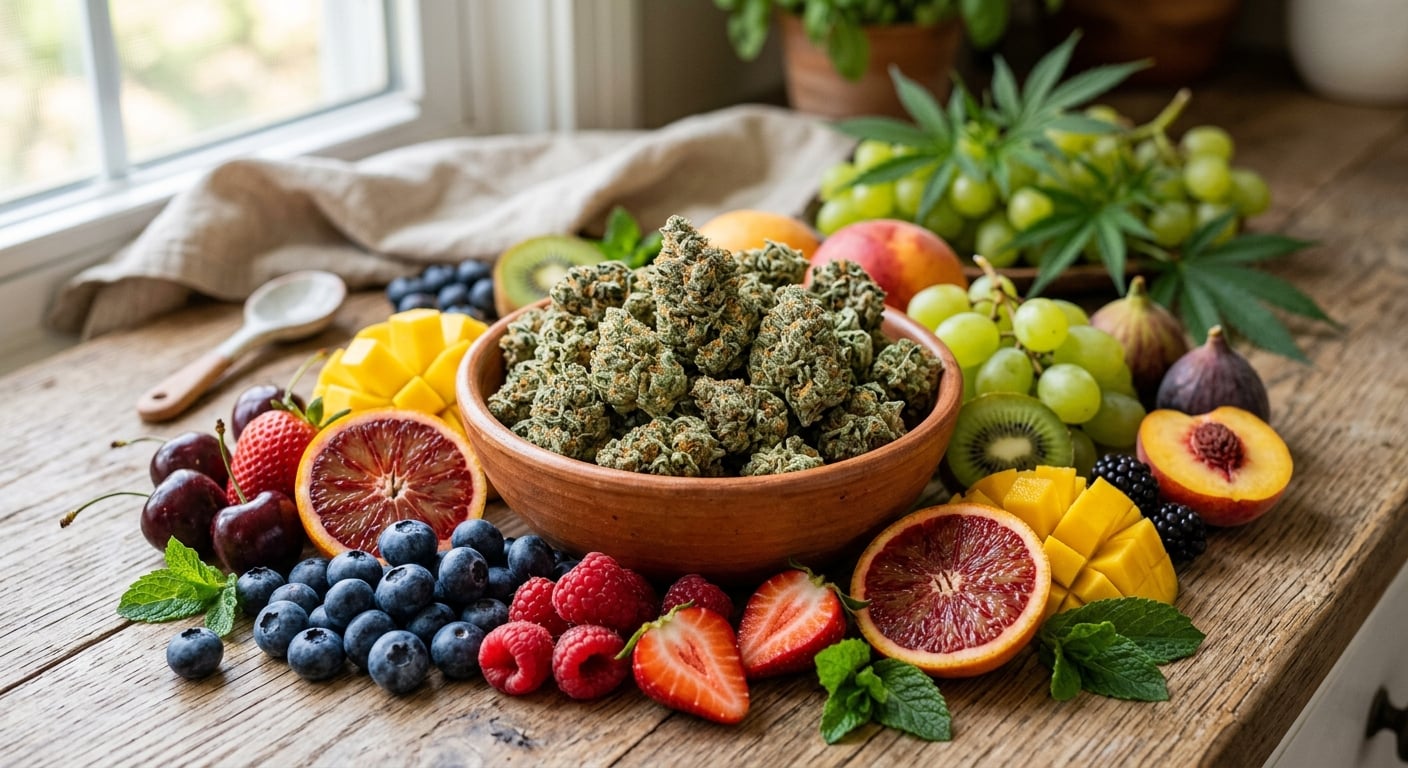
Myrcene is one of the most abundant terpenes found in cannabis. It is also naturally present in a variety of plants and foods, including mangoes, hops, thyme, parsley, and sweet basil. Myrcene is generally recognized for its earthy, herbal, and slightly fruity aroma. Cannabis varieties containing higher levels of myrcene are often associated with relaxing and potentially sedative characteristics.
- One of the most abundant terpenes in cannabis
- Also found in mangoes, hops, thyme, parsley, and basil
- Known for an earthy, herbal aroma and commonly associated with relaxing effects
- Often found in strains such as OG Kush, Granddaddy Purple, and Purple Urkle
Limonene
Limonene is best known for its bright and refreshing citrus aroma. It occurs naturally in the peel of lemons, limes, and oranges and can also be found in plants such as mint, fennel, anise, and juniper.
Cannabis varieties with notable levels of limonene are often associated with an uplifting and clear-headed experience. Its fresh citrus character makes it particularly popular among consumers who enjoy bright, fruity terpene profiles.
- Commonly found in lemons, limes, and orange peel, giving it a bright citrus aroma.
- Often associated with an uplifting, alert, or clear-minded experience.
- Cannabis strains high in limonene include Super Lemon Haze and Lemon Skunk
Pinene
Pinene is another important cannabis terpene and is particularly recognizable because of its fresh, pine-like aroma. It is naturally found in herbs such as rosemary, basil, parsley, and dill, as well as in a variety of cannabis plants.
The aroma of pinene can add a fresh, earthy character to a cannabis profile. It has also attracted scientific interest for its potential biological and therapeutic properties, including possible anti-inflammatory effects.
- Found in rosemary, basil, parsley, and dill, as well as many cannabis varieties.
- Recognized by its fresh, pine-like and earthy aroma.
- Properties that may support relaxation and help with inflammation and stress.
Linalool
Linalool is a naturally occurring terpene found throughout the plant world. It can be found in herbs and spices such as oregano, basil, coriander, and thyme, as well as in fruits including citrus, grapes, and pineapple.
Linalool is recognized for its sweet, floral, and herbal aroma. It is often associated with calming and relaxing characteristics and has been the subject of research into its potential biological properties
- Found in oregano, basil, spearmint, coriander, citrus fruits, grapes, and pineapple
- Known for its floral, herbal aroma and is commonly associated with calming effects
- Strains containing higher levels include Granddaddy Purple and Lavender Skunk
Caryophyllene
Caryophyllene has a distinctive spicy and peppery aroma and is found naturally in ingredients such as black pepper, cinnamon, basil, rosemary, carrots, and hops. It is particularly interesting because of its unique chemical characteristics compared with many other common cannabis terpenes.
Caryophyllene is often associated with earthy, spicy cannabis varieties and has attracted research interest for its potential anti-inflammatory properties.
- Found in black pepper, cinnamon, basil, rosemary, carrots, and hops
- Has a distinctive spicy, peppery aroma
- Often associated with cannabis strains with bold, earthy profiles
- Known for potential anti-inflammatory properties
- Found in strains such as Chem Dog, Sour Diesel, OG Kush, Cookies, and Gorilla Glue
Where Are Terpenes Found on Cannabis Plants?
Terpenes are primarily produced and stored in the trichomes of the cannabis plant. These tiny, resin-producing structures are concentrated on the flowers and surrounding leaves.
Trichomes contain a mixture of cannabinoids, aromatic compounds, and other plant constituents. As cannabis flowers mature, their terpene profiles can become increasingly pronounced, although the exact profile depends on genetics, growing conditions, maturity, and post-harvest handling.
Different cannabis varieties can produce very different combinations of terpenes, which is one reason they can have such distinct aromas and flavors.
During extraction, producers aim to preserve these valuable compounds while separating the resin from the plant material. The resulting extracts can contain concentrated levels of cannabinoids and terpenes.
Understanding the Relationship Between THC, Cannabinoids and Terpenes
Cannabis contains numerous cannabinoids and terpenes that can occur together in different combinations. This has led to significant interest in what is commonly referred to as the entourage effect, the idea that cannabinoids and terpenes may interact and influence the overall characteristics of cannabis and may influence feelings of pain relief.
THC percentage alone does not tell the entire story of a cannabis product. Two products with similar THC concentrations can have noticeably different aromas, flavors, and perceived effects because their terpene and cannabinoid profiles differ.
For this reason, looking at the complete cannabinoid and terpene profile can provide more information than focusing exclusively on THC potency.
Why Terpenes Matter When Growing Cannabis
Terpenes play an important role in defining the identity of different cannabis varieties. They contribute significantly to aroma and flavor and can help explain why two varieties with similar cannabinoid levels can smell, taste, and feel different. The flowering period and harvesting stage are when terpene profiles will be most aromatic and volatile.
Understanding terpene profiles alongside cannabinoid content gives consumers and producers a more complete picture of cannabis chemistry. As research continues, our understanding of how terpenes interact with cannabinoids and other plant compounds is likely to develop further.
Ultimately, cannabis is more than a single percentage printed on a label. The combination of cannabinoids, terpenes, genetics, cultivation, harvesting, and processing all contribute to the characteristics of the final product
Gold Scrolling Footer Ad
reserve your ad here