Gold Header Ad
reserve your ad herePlatinum Header Ad
reserve your ad hereLow-Stress Training (LST) is one of the easiest and most effective ways to improve cannabis plant growth, increase yields, and create an even canopy without damaging your plants.
Unlike more aggressive training methods, LST focuses on gently bending and tying down stems and branches to encourage wider growth and better light penetration. This article will explain what LST is, the benefits of low-stress training, tools and equipment needed, the best time to apply LST, and my top tips for LST success!
What Is Low-Stress Training (LST)?
Understanding the Technique
Low-Stress Training is a cannabis plant training method that involves gently bending stems or branches and tying them down using soft wire or string. You will need to lower the tallest parts of the plant to create the bushy, stocky growth structure associated with LST. By lowering the main stem, the plant redirects energy to lower branches, allowing multiple bud sites to develop evenly.
- A wider plant structure
- More growth sites
- Better airflow
- Improved light exposure
- side branches to grow upward
So What Are the Benefits of Low-Stress Training
Based on my experience, LST is the most impactful cannabis plant training technique. It can really change how your plant growth and yields. Below is a list of all the benefits of using the LST method.
- Increased light exposure
- More light to reach lower growth
- Better bud development
- Improved photosynthesis
- Bushier plant growth
- Shorter plants
- Wider canopies
- Dense foliage structures
- Uniform crown shoots
- Fewer undeveloped lower buds
- Consistent bud size
- Improved airflow
- Reduce humidity pockets
- Improve ventilation
- Lower the risk of mold and mildew
- Higher overall yields
- Better-quality buds
- More efficient light usage
Better for Small Grow Spaces
LST is perfect for growers with:
- Low ceilings
- Small tents
- Limited vertical space
What You Need for Low-Stress Training
LST is inexpensive and requires very little equipment. You can actually get all the tools and equipment needed from your local garden center or hardware store.
Essential Equipment
Gardening Wire or Thick String
Use:
- Soft plant wire
- Thick string
- Flexible garden ties
- Scissors
- A healthy cannabis plant
- Proper lighting
When Should You Perform LST?
The ideal time for low-stress training is during the vegetative stage, when the light cycle is set to 18/6. For best results, plants should be 30–50 cm tall with 3–5 internodes developed. Plants that are too young may stay stunted, grow too slowly or fail to recover properly.
Mature and robust plants will be the best candidates for LST, as they are flexible, easier to bend and far less likely to snap under pressure. After tying down stems recover within 2–3 days, growth tips begin turning upward quickly.
Step-by-Step Guide to Low-Stress Training
Below is a step-by-step guide for performing the LST technique on your plants.
Step 1: Prepare the Gardening Wire
Cut your wire or string to around 60 cm in length. Make sure it is flexible
Step 2: Create a Hole in the Pot
Using scissors, make a small hole near the rim of the pot and ensure it’s large enough for the wire to pass through
Step 3: Wrap the Wire Around the Stem
Carefully wrap the wire loosely around the upper stem, avoid tightening too hard and leave room for stem expansion
Step 4: Slowly Bend the Plant Downward
Apply gentle pressure while gently pulling the stem downward. Supporting the plant with your other hand to create a flexible bend
Step 5: Secure the Wire
Once the top node has been lowered, you can feed the wire through the hole in the pot, and slowly pull it tight enough to hold the position so the top node is lowered. Aim to lower the top by 6–9 inches.
Step 6: Tie a Secure Knot
:Secure the wire to the hole in the pot creating a solid loop. Check that the wire has enough slack so the stem does not snap. The stem should curve naturally without snapping.
Auto-Flowering Strains and LST
According to 420seeds, there are indica dominant hybrids and sativa dominant hybrids, however, not all autos will grow with the same height, width, structure, number of side branches and produce the same amount of foliage.
Applying LST to autos can improve light penetration, increase yields and produce larger buds, however you will only have a short growth period where autos are in a vegetative state. Autos begin to flower from week 5 onwards. LST on autos should be done at week 4.
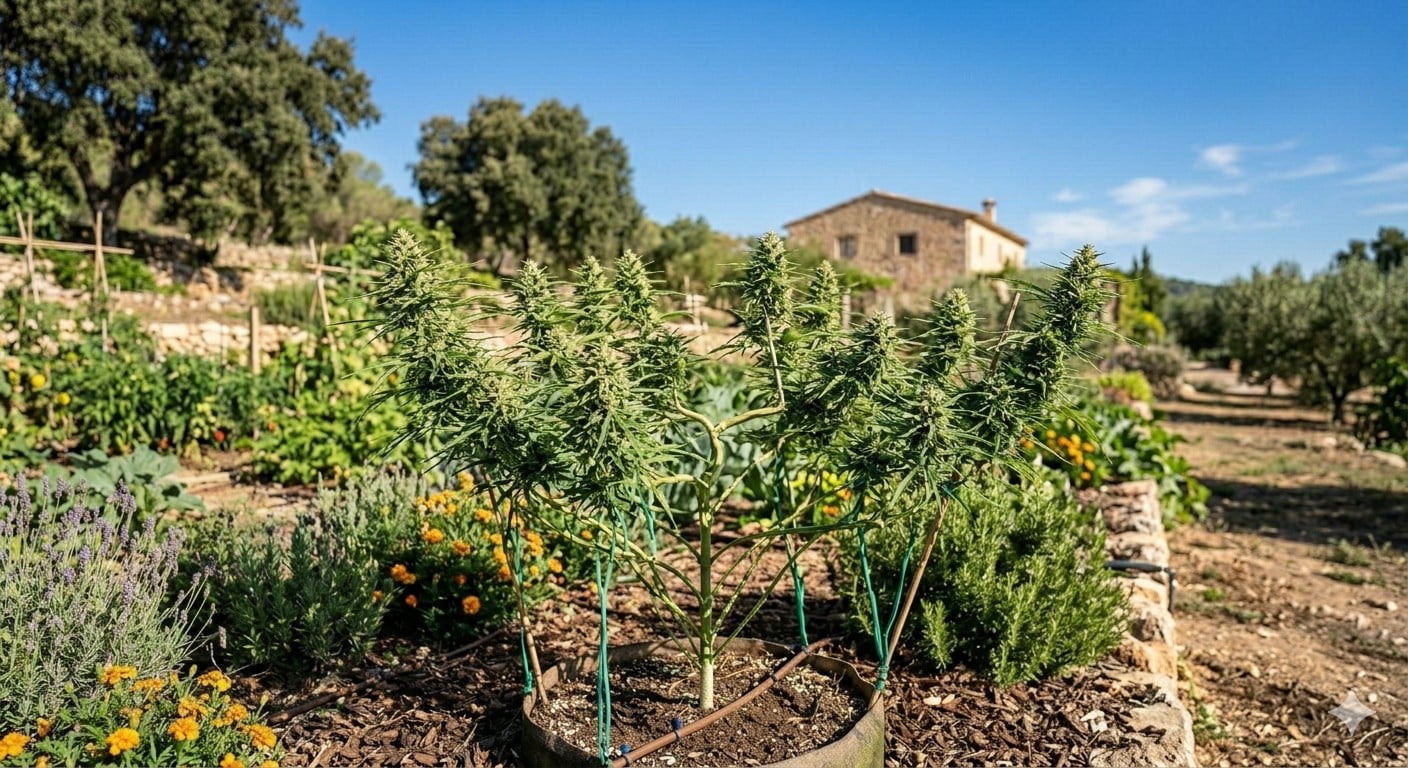
Feature image: An outdoor plant that was trained using the LST technique.
Gold Scrolling Footer Ad
reserve your ad here