Gold Header Ad
reserve your ad herePruning is the process of removing unnecessary leaves and lower branches so the plant can focus its energy on developing the main canopy. By clearing away the lower 60–90% of growth beneath the plant’s crown, growers encourage the formation of larger, denser flowers during the flowering stage.
When done correctly, the upper canopy receives more light, airflow, and nutrients, resulting in stronger bud development and a more even harvest. In this article, I explain all you need to know about pruning your cannabis plants. Explaining the benefits, tools, and equipment needed, a step-by-step guide on how to properly prune, and my top tips to consider.
How to Prune Cannabis Plants
Pruning cannabis plants is straightforward and doesn’t require advanced gardening skills. The goal is to carefully remove excess foliage and lower side branches using clean, precise cuts.
Use sharp scissors, pruning shears, or a scalpel to avoid damaging the plant tissue. Young growth can sometimes be pinched off by hand, but clean tools are recommended to reduce stress and improve recovery time. Always work carefully and avoid removing too much at once, especially on younger plants.
Benefits of Pruning and Defoliating Cannabis
Pruning and defoliation offer several advantages for cannabis growers, from healthier plants to improved yields. Here are some of the biggest benefits:
Healthier, Stronger Plants
Removing unnecessary growth helps plants redirect energy to the most productive areas, resulting in stronger and more vigorous development.
Better Light Penetration
Pruning opens the canopy and allows light to reach lower branches and bud sites that would otherwise remain shaded.
Improved Airflow
Cannabis plants thrive in well-ventilated environments. Removing excess foliage improves air circulation around the plant and reduces humidity buildup.
Reduced Risk of Pests
Dense foliage creates ideal conditions for pests and mold. Defoliation helps keep the growing area cleaner and less attractive to insects.
Larger, Denser Buds
Instead of producing many small, underdeveloped buds, the plant concentrates energy into the top canopy, creating thicker and more resinous flowers.
Easier Maintenance
Pruned plants are easier to inspect, water, train, and harvest. You’ll also spend less time trimming small “popcorn” buds after harvest.
No Expensive Equipment Required
Pruning is inexpensive and beginner-friendly. A simple pair of sharp scissors or a scalpel is all you need.
Ideal Opportunity for Cloning
Lower branches removed during pruning can often be used as clones for future grow cycles.
What About Pruning Autos?
Autos are not the same as photoperiods and you have a very short window before they start flowering. Autoseeds recommends that timing is key; too late, and you risk stressing the plant during its crucial bud development phase, potentially impacting the yield and quality of the harvest.
What You’ll Need Before You Start
Pruning cannabis plants requires only a few basic tools:
- Sharp scissors or pruning shears
- Gloves
- A healthy cannabis plant
Step-by-Step Guide to Pruning Cannabis
Step 1: Identify the Main Growth Areas
Locate the strongest upper branches and the main canopy growth.
Step 2: Remove Lower Growth
Using clean scissors or a scalpel, remove smaller branches and foliage beneath the top internodes.
Step 3: Save or Discard Trimmings
Healthy side branches can be saved for cloning, while unwanted material can be composted or discarded.
Step 4: Clean Up Remaining Growth
Use your hands to gently remove any small shoots or leaves you may have missed.
Step 5: Allow Recovery Before Flowering
Give the plant time to recover and continue vegetative growth before transitioning to flowering. Avoid heavy pruning once flowering has begun.
Top Pruning Tips for Beginners
Tip #1: Wait Until Plants Mature
Allow plants to reach around 28 days of growth before pruning. More mature plants recover faster and respond better to training.
Tip #2: Different Strains Respond Differently
Compact indica varieties often benefit greatly from pruning because it improves airflow and canopy structure. Some strains may tolerate heavier pruning better than others.
Tip #3: Use Pruning for Cloning
If your plants have strong lower branches, pruning time is a great opportunity to take clones for your next grow cycle instead of throwing the material away.
Final Thoughts
Pruning may seem intimidating at first, especially when cutting away healthy growth, but cannabis plants respond extremely well to strategic defoliation. With proper timing and technique, pruning can improve airflow, increase light exposure, reduce pests, and help produce larger, more uniform buds.
For growers looking to maximize both plant health and harvest quality, pruning is one of the most effective techniques to learn.
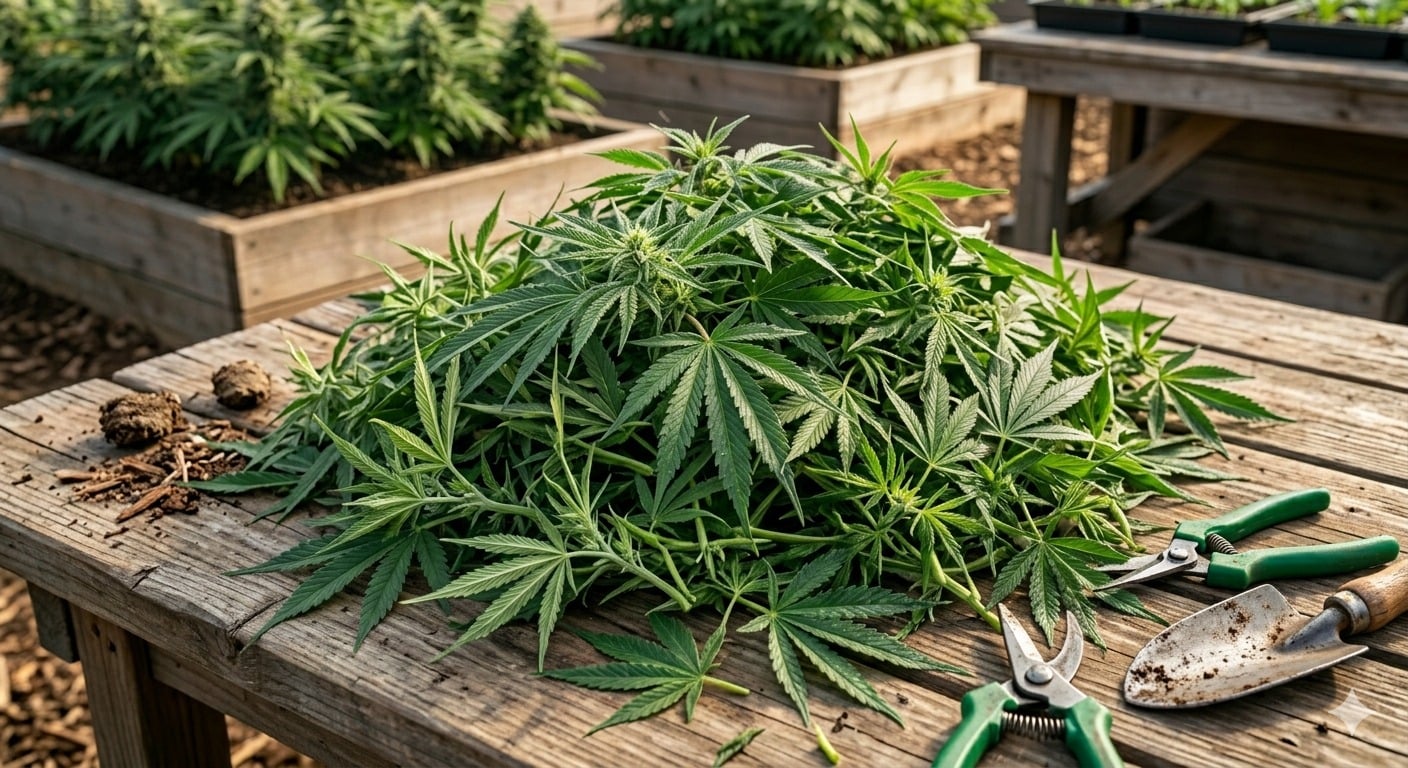
Feature photo: A pile of freshly cut pile of leaves and small undeveloped shoots.