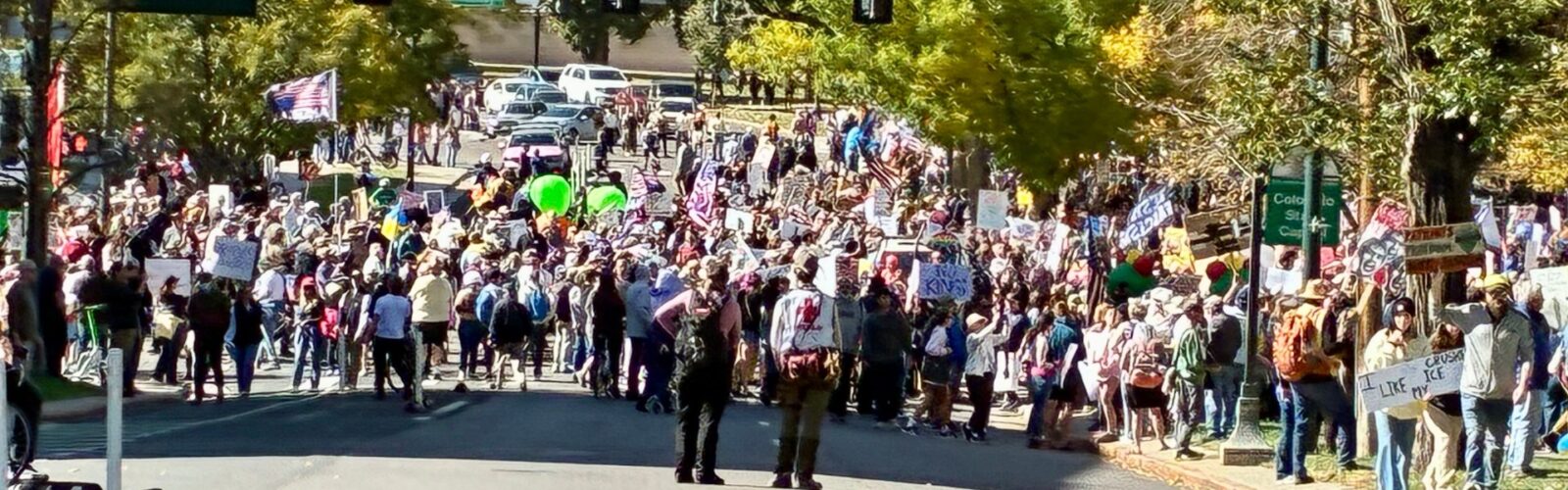
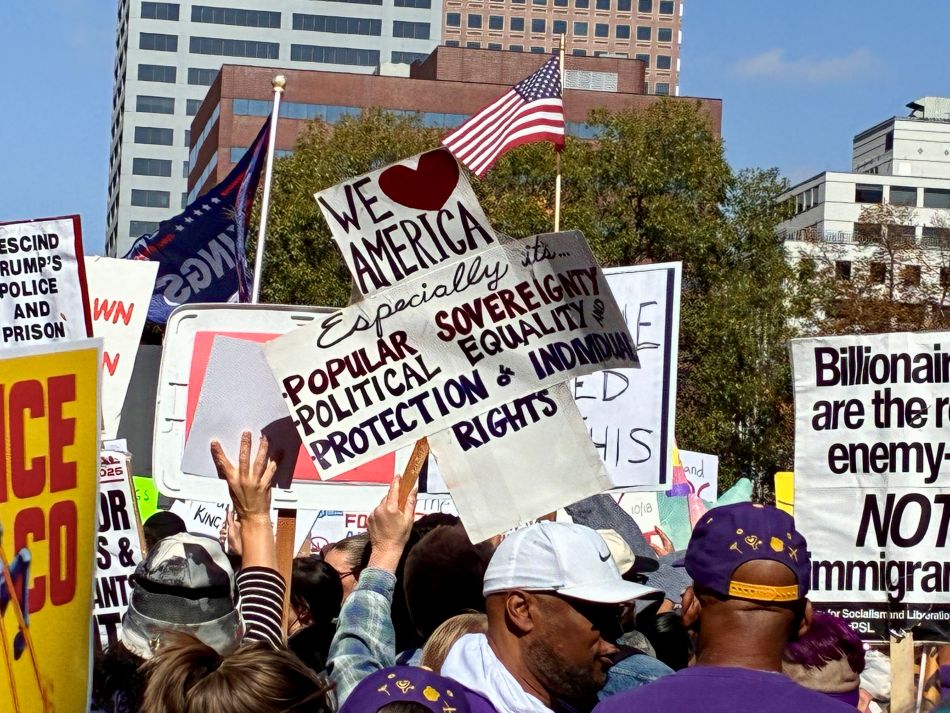
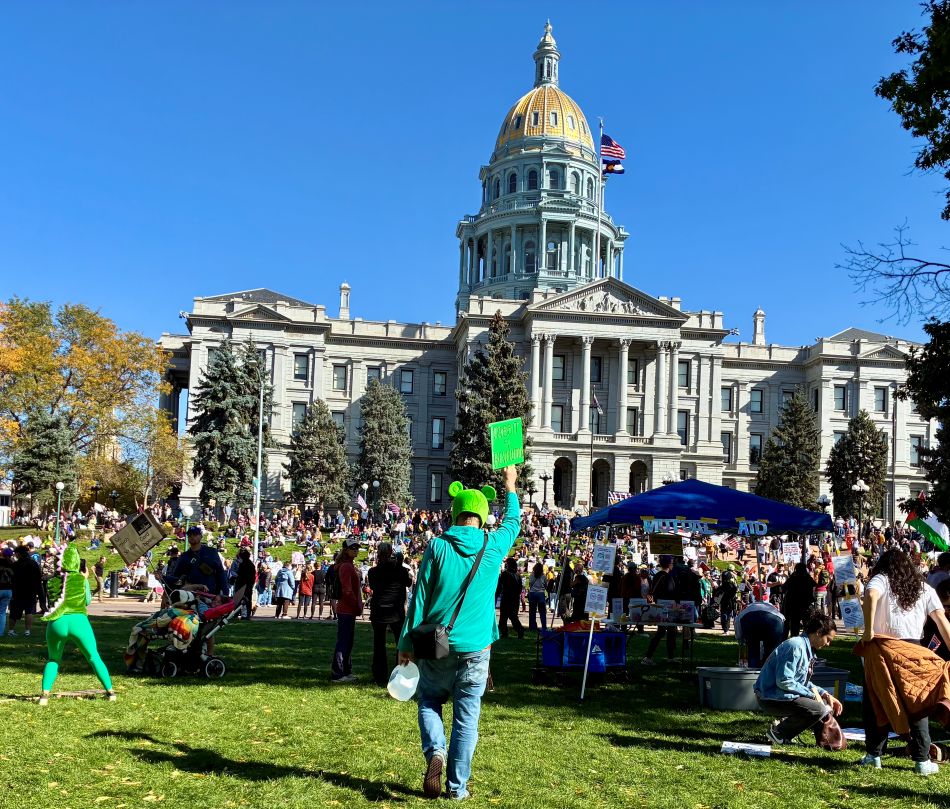
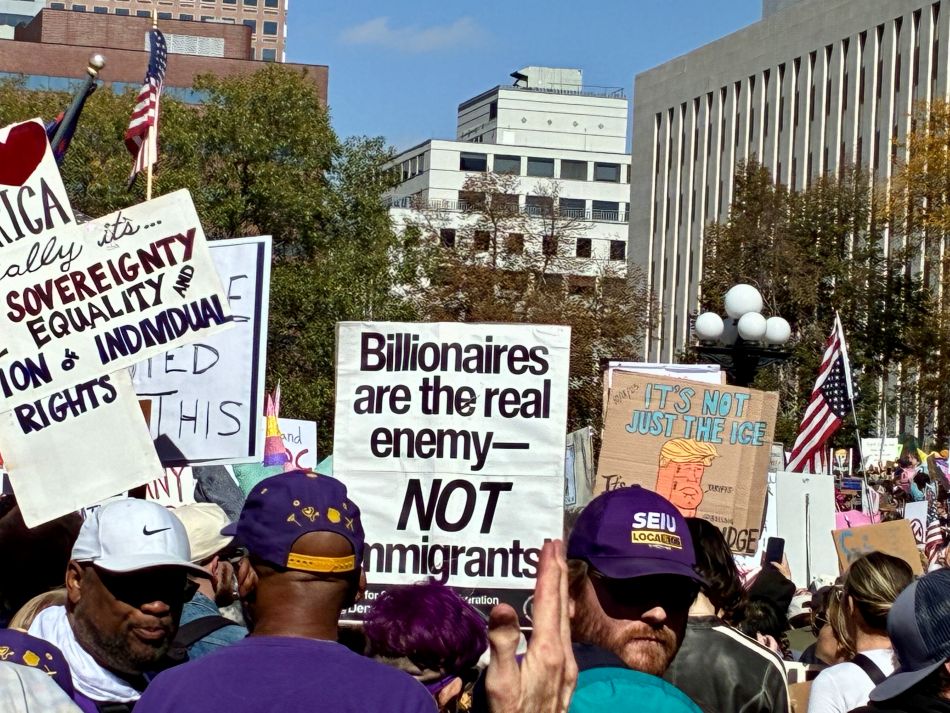
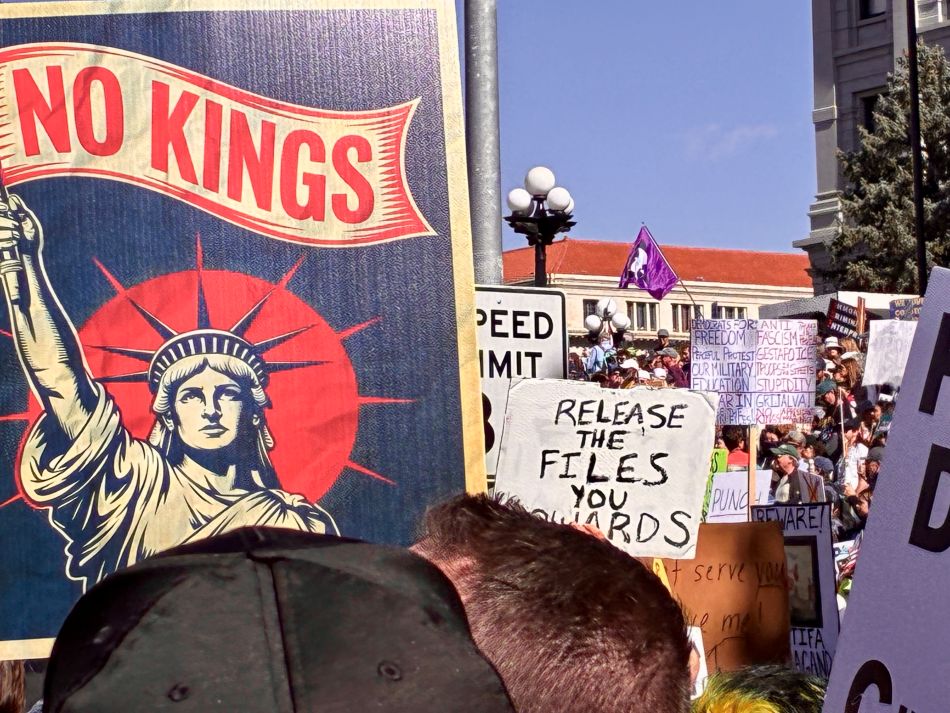
Denver, CO – Amid calls for systemic reform and justice, thousands gathered in Denver and across Colorado for the “No Kings” protest two Saturdays ago. The peaceful rally promoted democracy, civic engagement, and opposition to systemic oppression, uniting concerns about voting rights, prison labor, and policing into a collective plea for change. As part of a national movement, the event drew people of all ages and backgrounds to over 2,600 gatherings across the U.S.
The Denver march began at 12:19 p.m. October 18th, 2025, outside the Colorado State Capitol, and proceeded through downtown along Lincoln Street. Participants used signs and chants to demand expanded voting rights and denounce oppressive policies. Veterans Park featured informational booths to encourage community organizing and involvement in local governance. The protest ended peacefully, with most dispersing by evening. While many said the demonstration raised public awareness and spurred serious discussion about systemic issues, the lack of responses or commitments from local authorities highlighted the protest’s limited, immediate impact on decision-making.
Modern-Day Slavery in Prisons
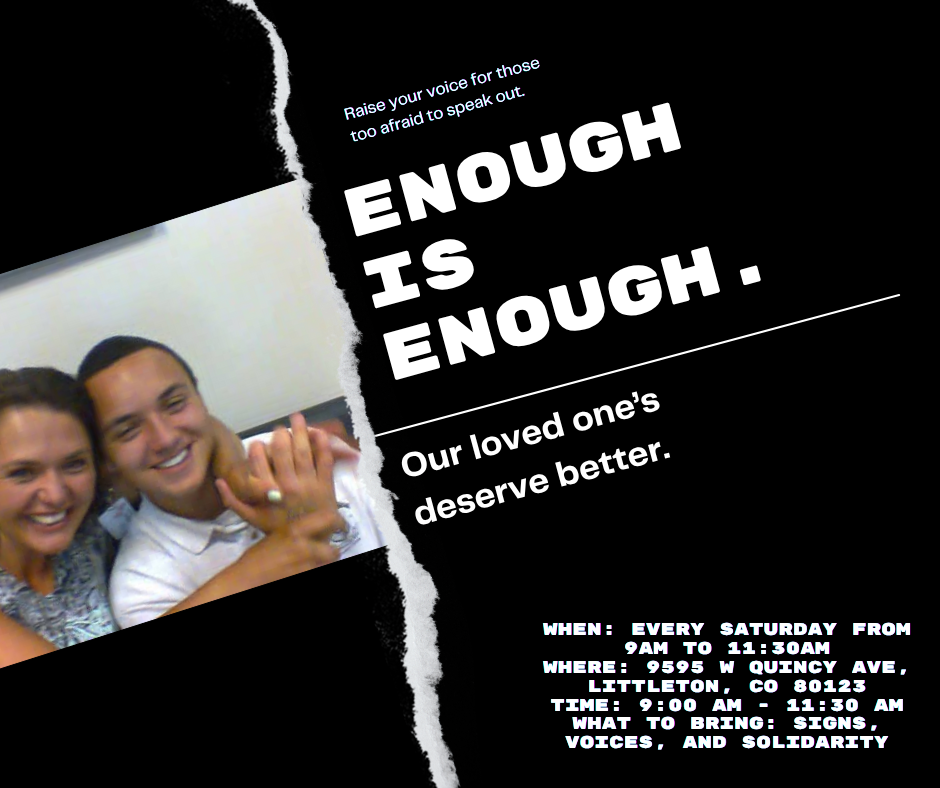
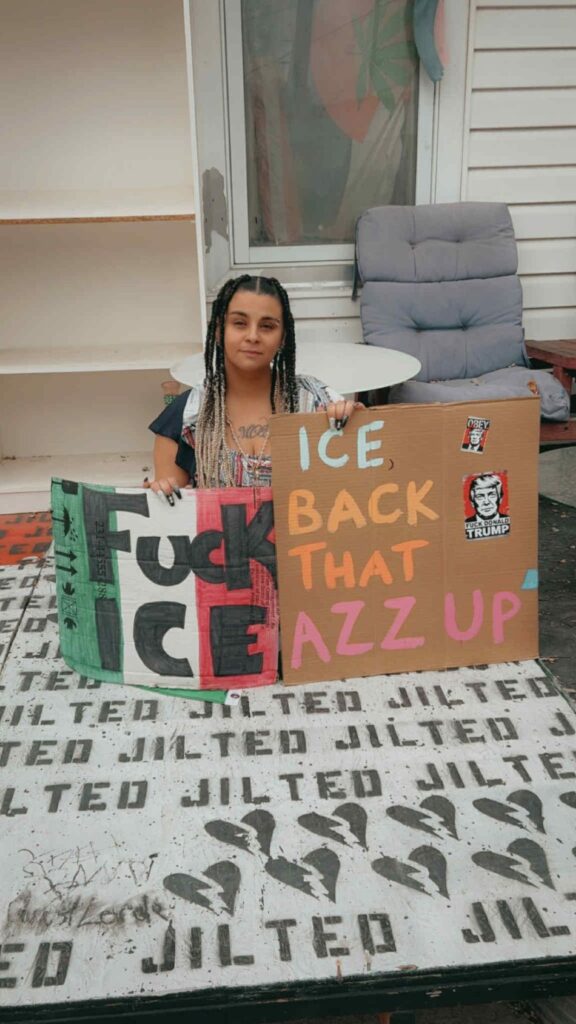
Protesters also called attention to modern-day slavery in American prisons, specifically focusing on the exploitation of prison labor and racial disparities that disproportionately affect communities of color. This concern was highlighted by local mother Consuelo Garcia, whose son was recently murdered while incarcerated at the Englewood, Colorado Federal holding facility. As protestors marched downtown, she held her own protest in Englewood for her son, Mauritzio Phornwall, inmate #07325011. Mrs. Garcia emphasized the lack of information available about her son’s death, saying, ‘I want answers, I want the cover-up to stop, and I want justice for my baby. I want change, I don’t want this to happen to someone else’s family.’ Through her tears, she outlined her ongoing demands for transparency, promising, ‘We will be out here every Saturday from 9am to 11:30 am until transparency from the federal bureau has been had regarding my son’s murder. Come out and support, please. My son was a voice for the unheard, and I must be a voice for him.’ Supporters are urged to join weekly vigils, contact officials to demand transparency, and contribute to families affected by prison injustice. Today, take a stand—show up, call, write, or donate to build real solidarity and drive meaningful change.
Police Response and Arrests
As the protest continued into the evening, law enforcement actions changed the course of events. The Denver Police Department used pepper balls and smoke canisters to disperse individuals attempting to access the interstate, a measure taken after the main activities ended. According to official reports, five arrests were made, primarily for noncompliance with lawful orders or interference with police functions. This use of non-lethal crowd control measures is part of ongoing discussions on protest policing, including consideration of proportionality and necessity. Some participants and observers questioned law enforcement’s approach, offering recommendations for alternative, non-violent de-escalation practices. Such methods, including communication between protest leaders and law enforcement and mediation by trained individuals, have been used in other cities to achieve peaceful outcomes.
The “No Kings” protest in Denver sent a clear message: urgent reforms are needed for immigrant and marginalized communities. Organizers and participants called on policymakers and the public to take immediate, concrete action toward justice and equity.
A Missed Opportunity for Local Officials
Despite the peaceful protest, local officials did not attend or make their presence known. Participants shared concerns but reported that their requests for accountability and action were not acknowledged by decision-makers. As a result, attendees left seeking new or additional avenues to effect change, underscoring the need for sustained advocacy beyond the event. Casey Jo Castel, a local Denver resident who was present during the “No Kings” protest, said,”I attended the protest because I’m deeply concerned about the current state of our country under Trump’s leadership. I believe it’s essential for people to recognize our shared humanity and work towards a more inclusive and compassionate society. I’m calling for change and urging others to join me in demanding a better future for all. I had hoped to hear some of our elected officials here today and be vocal, but I heard nothing from them”. Casey closed with.
Exploitation of Prison Labor
Amid protest concerns, Colorado took a major step against modern-day slavery by removing the 13th Amendment exception from its state constitution. This exception had permitted forced prison labor as punishment, allowing states to make inmates work for little or no pay and in unsafe conditions. In 2018, Colorado became one of the first states to abolish slavery in its constitution, paving the way for others to follow. Despite this landmark legislative change, recent reports suggest the amendment’s impact on actual prison labor conditions has been mixed. According to a 2023 study, while some prisons have improved work conditions and compensation, others continue to exploit loopholes, leaving many inmates still working in challenging conditions for minimal pay. A testimony from a former inmate highlighted that, though the exploitative nature of assignments has lessened, significant changes are still required to ensure fair treatment and wages across all facilities.
Impact on Communities of Color
These developments reveal enduring inequalities in the American justice and immigration systems. The ‘No Kings’ protest directly confronted these issues, underscoring how harsh policies create generational poverty and block rehabilitation. Participants demanded policy reforms that dismantle systemic barriers and ensure fair treatment for all, especially for marginalized groups.
Key Trends:
* Immigration detention is increasing. The daily population of detained immigrants reached 57,861 as of July 7, 2025. In Fiscal Year 2023, over 273,000 people were detained in immigration facilities across the country.
* Companies like GEO Group and CoreCivic operate many immigration detention facilities. 91% of ICE detainees are housed in private facilities.
* Native-born Americans are incarcerated at higher rates than immigrants, but immigrants are more often detained for immigration offenses, emphasizing complex disparities.
Incarceration Rates:
* Native-born Americans: 1,221 per 100,000
* Illegal Immigrants: 613 per 100,000
* Legal Immigrants: 319 per 100,000
Collectively, these data illustrate the complex interplay between privatized detention operations, patterns of incarceration, and the disproportionate effects on immigrant communities. This section’s transition foregrounds critical questions about the influence of private-sector involvement in the detention system and its broader implications for social equity and justice.
Shifting the focus to potential conflicts of interest, there are questions regarding connections between political leadership and private prison operators.
GEO Group’s Connections to Trump:
* Campaign Contributions: GEO Group’s PAC contributed $5,000 to Trump’s campaign, part of a larger $15,000 donation to the Trump Save America Joint Fundraising Committee.
* Inauguration Committee Donation: GEO Group donated $250,000 to Trump’s inauguration committee in 2017.
* Business Dealings: GEO Group held its conference at Trump’s Doral resort in 2017, and its vice president stayed at Trump’s DC Hotel multiple times.
CoreCivic Connections to Trump:
* Stock Surge: CoreCivic stock price surged after Trump’s 2016 election, rising 61% during his first year in office.
* Trump administration immigration policies benefited CoreCivic, increasing its growth opportunities.
Immigration and Housing
In addition to raising issues surrounding prison labor, protest participants expressed significant apprehension regarding the administration’s immigration and housing policies, particularly as they pertain to the heightened risks of exploitation and involuntary labor. Empirical evidence indicates that immigrants frequently encounter substantial barriers to securing affordable housing. For example, a 2022 report by the National Low Income Housing Coalition found that immigrant households are disproportionately burdened by high rent costs and are more likely to reside in overcrowded and substandard housing conditions, largely due to discriminatory practices by landlords and limited legal protections (NLIHC, 2022). These structural barriers not only constrain access to safe and stable housing but also inhibit immigrants from seeking necessary social services, as the pervasive fear of deportation often deters individuals from reporting exploitation to authorities. This confluence of factors fosters an environment where exploitation among immigrant tenants remains both prevalent and underreported.
Connection to Slavery
This ongoing exploitation, rooted in history, raises questions about the system. Policymakers have not protected incarcerated workers, and these practices still disproportionately impact certain communities.
Protesters’ Demands
Protesters demanded urgent reforms: fair compensation for incarcerated workers, reduced disparities in incarceration, increased affordable housing for immigrants, and accountability from policymakers. Their unified message calls for a more just and equitable system.
At the protests end, organizers urged persistent civic action to achieve lasting change. The “No Kings” movement promotes coordinated efforts—writing officials, attending town halls, and joining advocacy groups—to keep pressure on leaders and sustain momentum for systemic reform.
All photos credit: Amberly R Taylor